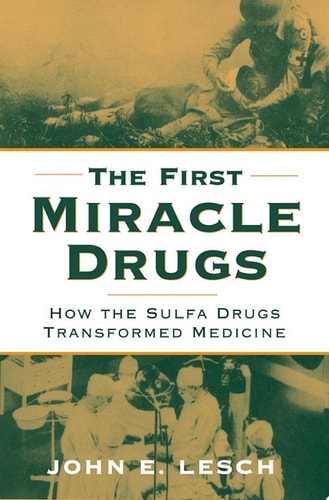
The First Miracle Drugs: How the Sulfa Drugs Transformed Medicine
0
0
As an Amazon Associate and affiliate partner, Menrva Books earns from qualifying purchases. Learn more
Author Description
In the decade from 1935-1945, while the Second World War raged in Europe, a new class of medicines capable of controlling bacterial infections launched a therapeutic revolution that continues today. The new medicines were not penicillin and antibiotics, but sulfonamides, or sulfa drugs. The sulfa drugs preceded penicillin by almost a decade, and during World War II they carried the main therapeutic burden in both military and civilian medicine. Their success stimulated a rapid expansion of research and production in the international pharmaceutical industry, raised expectations of medicine, and accelerated the appearance of new and powerful medicines based on research. The latter development created new regulatory dilemmas and unanticipated therapeutic problems. The sulfa drugs also proved extraordinarily fruitful as starting points for new drugs or classes of drugs, both for bacterial infections and for a number of important non-infectious diseases. This book examines this breakthrough in medicine, pharmacy, and science in three parts. Part I shows that an industrial research setting was crucial to the success of the revolution in therapeutics that emerged from medicinal chemistry. Part II shows how national differences shaped the reception of the sulfa drugs in Germany, France, Britain, and the United States. The author uses press coverage of the day to explore popular perceptions of the dramatic changes taking place in medicine. Part III documents the impact of the sulfa drugs on the American effort in World War II. It also shows how researchers came to an understanding of how the sulfa drugs worked, adding a new theoretical dimension to the science of pharmacology and at the same time providing a basis for the discovery of new medicinal drugs in the 1940s, 1950s, and 1960s. A concluding chapter summarizes the transforming impact of the sulfa drugs on twentieth-century medicine, tracing the therapeutic revolution from the initial breakthrough in the 1930s to the
Menrva's Summary
THE THESIS
This book investigates how the emergence of sulfonamides between 1935 and 1945 initiated a therapeutic revolution that fundamentally altered the trajectory of modern medicine and the pharmaceutical industry. John E. Lesch, a historian of science, utilizes a multi-national comparative framework to analyze the intersection of industrial research, national policy, and clinical application. By examining the transition from traditional medicine to the era of targeted chemical therapeutics, the author argues that sulfa drugs provided the essential theoretical and practical foundation for subsequent pharmacological advancements.
THE SCOPE MAP
What You Will Find
- Comparative analysis of pharmaceutical research in Germany, France, Britain, and the United States.
- Historical documentation of the role of sulfa drugs in military and civilian medicine during World War II.
- Examination of the shift toward industrial-based medicinal chemistry.
- Analysis of public perception through contemporary press coverage.
Scope Limits
- The text does not provide a comprehensive clinical manual for the administration of sulfonamides.
- The narrative concludes its primary focus on the mid-twentieth century, excluding modern-day antibiotic resistance developments.
THE AUTHORITY PERSPECTIVE
Experts recognize this work as a definitive historical account of the pre-penicillin era of chemotherapy. Readers frequently note the academic density of the prose, which provides a rigorous examination of the institutional and scientific shifts in twentieth-century medicine.
Page Count:
376
Publication Date:
2006-01-01
Publisher:
Oxford University Press
ISBN-10:
0190293209
ISBN-13:
9780190293208
History
Non-Fiction
Medical
Military History
Science History
Medicine history
English
English & College Success
Allied Health
Pharmacology
Linguistics
Sulphonamides
Community Tags
Similar Books