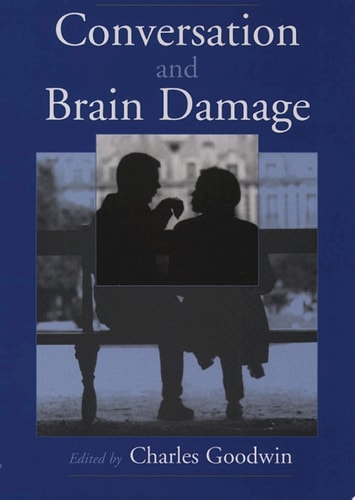
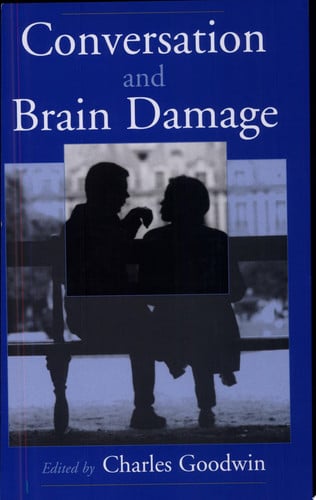
Conversation and Brain Damage
0
0
As an Amazon Associate and affiliate partner, Menrva Books earns from qualifying purchases. Learn more
Author Description
How do people with brain damage communicate? How does the partial or total loss of the ability to speak and use language fluently manifest itself in actual conversation? How are people with brain damage able to expand their cognitive ability through interaction with others - and how do these discursive activities in turn influence cognition?This groundbreaking collection of new articles examines the ways in which aphasia and other neurological deficits lead to language impairments that shape the production, reception and processing of language. Edited by noted linguistic anthropologist Charles Goodwin and with contributions from a wide range of international scholars, the articles provide a pragmatic and interactive perspective on the types of challenges that face aphasic speakers in any given act of communication.Conversation and Brain Damage will be invaluable to linguists, discourse analysts, linguistic and medical anthropologists, speech therapists, neurologists, psychiatrists, psychologists, workers in mental health care and in public health, sociologists, and readers interested in the long-term implications of brain damage.
Menrva's Summary
THE THESIS
This collection investigates how individuals with neurological deficits, specifically aphasia, navigate the complexities of human communication and how social interaction serves to scaffold or expand their cognitive capabilities. Edited by linguistic anthropologist Charles Goodwin, the volume synthesizes research from international scholars to analyze the pragmatic mechanisms of language production and reception in the presence of brain damage. The contributors argue that communication is an inherently interactive process, where the social environment plays a critical role in shaping how aphasic speakers manage their linguistic impairments.
THE SCOPE MAP
What You Will Find
- Analysis of aphasia and its impact on conversational fluency and structure
- Theoretical frameworks for understanding language as a social and interactive activity
- Empirical studies on how discursive interaction influences cognitive processing
Scope Limits
- The text does not provide clinical treatment protocols or medical rehabilitation exercises for aphasia patients
- It does not cover the biological or neuroanatomical mechanisms of brain injury in isolation from communicative outcomes
THE AUTHORITY PERSPECTIVE
Experts in linguistics and medical anthropology recognize this work as a significant contribution to the study of social interaction and cognitive impairment. Readers frequently note the academic density of the prose, which is intended for professionals and researchers in the fields of speech therapy, neurology, and discourse analysis.
Page Count:
324
Publication Date:
2003-01-01
Publisher:
Oxford University Press
ISBN-10:
0190284625
ISBN-13:
9780190284626
Psychology
Speech Pathology
Allied Health
Discourse Analysis
Neurology
English & College Success
Linguistics
Medical
Aphasia
English
Brain damage
Anthropology
Community Tags
Other Editions(3)

Similar Books