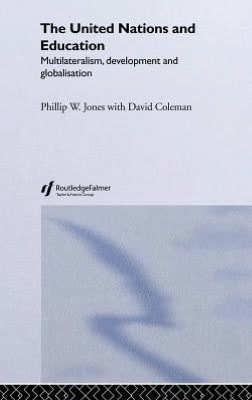
United Nations and Education: Multilateralism, Development and Globalisation
0
0
As an Amazon Associate and affiliate partner, Menrva Books earns from qualifying purchases. Learn more
Author Description
The UN is often questioned about its ongoing relevance and overall effectiveness in the 21st century, particularly in its involvement with educational policy and co-operation around the globe. This ground-breaking book examines the four key agencies within the UN system that share the vital role of addressing educational futures: UNESCO, the World Bank, UNICEF and UNDP.As the core of educational multilateralism, these agencies powerfully reflect the UN's historic grounding in peace, human rights and economic development. The history of each agency's commitment to education is explored with critical detachment, with particular attention paid to the post-Cold War period, during which each agency has needed to re-think the impact of globalisation on both its modes of operation as well as the content of its education policies. Just as education policy itself has been subject to the impact of globalisation, so to has each agency had to adapt at a time when not only education but also their own mandates have been thrown open to question.This timely book will be essential reading for all those working with and for UN agencies, foreign aid workers and the development co-operation industry. At a time when education policies, budgets and strategies appear wide open to profound changes, this book will provide a much-needed roadmap to the future.
Menrva's Summary
THE THESIS
This book investigates the evolving role, relevance, and effectiveness of the United Nations system in shaping global educational policy during the 21st century. The authors, David Coleman and Phillip W. Jones, utilize historical analysis and institutional review to examine how four primary agencies—UNESCO, the World Bank, UNICEF, and UNDP—have navigated the complexities of globalization. By evaluating the post-Cold War era, the text provides a critical assessment of how these organizations have adapted their mandates and operational strategies to address shifting international priorities in education and development.
THE SCOPE MAP
What You Will Find
- Historical analysis of the educational mandates of UNESCO, the World Bank, UNICEF, and UNDP.
- Examination of the impact of globalization on international educational policy and institutional operations.
- Critical review of the post-Cold War shift in development cooperation and aid strategies.
- Assessment of the intersection between human rights, peace, and economic development within the UN framework.
THE AUTHORITY PERSPECTIVE
Experts and practitioners in the field of international development recognize this work as a comprehensive resource for understanding the institutional mechanics of UN educational policy. Readers frequently note the academic rigor and the clarity with which the authors navigate the complex interplay between global policy and local implementation.
Page Count:
0
Publication Date:
2004-01-01
Publisher:
Taylor & Francis Group
ISBN-10:
0203421493
ISBN-13:
9780203421499
History
International relations
Globalization
United Nations
World Bank
UNESCO
UNICEF
Education