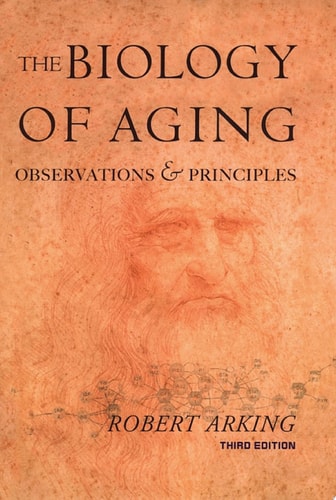
Biology of Aging: Observations and Principles
0
0
As an Amazon Associate and affiliate partner, Menrva Books earns from qualifying purchases. Learn more
Author Description
Robert Arking's Biology of Aging, 3rd edition, is an introductory text to the biology of aging which gives advanced undergraduate and graduate students a thorough review of the entire field. His prior two editions have also served admirably as a reference text for clinicians and scientists. This new edition captures the extraordinary recent advances in our knowledge of the ultimate and proximal mechanisms underlying the phenomenon of aging. As a result, six important conceptual changes are included here: · Clarified distinctions between the biological mechanisms involved in longevity determination and those involved in senescent processes. · A new conceptual framework around which we can organize all the new facts about aging. This will assist readers to make sense of the information and use the data to form their own ideas. · Increased knowledge of aging cells has lead to new ideas on how a cell transits from a healthy state to a senescent state, while still allowing for high levels of intra- and inter-specific variability. · Discussion of senescent mechanisms assists the reader to understand that aging is a non-programmatic loss of function, likely arising from the loss of regulatory signals, and so is modifiable in the laboratory. · Because the standard evolutionary story does not fully explain the evolution of social organisms, this edition also includes recent work dealing with intergenerational resource transfers. · Lastly, if aging mechanisms are plastic, then the demand to move these anti-aging interventions into the human arena will inevitably grow. A discussion of the biological and ethical arguments on both sides of the question frames the question in an appropriate manner. The mass of data related to aging is summarized into fifteen focused chapters, each dealing with some particular aspect of the problem. The last two chapters integrate all this material into a coherent view of how the relevant biological processes change over the life span.
Menrva's Summary
THE THESIS
This text investigates the biological mechanisms of aging to determine how senescent processes differ from longevity determination. Robert Arking, a recognized authority in gerontology, synthesizes recent scientific advancements to provide a comprehensive framework for understanding aging as a non-programmatic loss of function. The book utilizes current research data to argue that aging is a plastic process, potentially modifiable through laboratory intervention.
THE SCOPE MAP
What You Will Find
- Conceptual frameworks for organizing aging data
- Analysis of cellular transitions from healthy to senescent states
- Evolutionary perspectives on social organisms and intergenerational resource transfers
- Ethical and biological arguments regarding human anti-aging interventions
Scope Limits
- The text focuses primarily on biological and physiological mechanisms rather than sociological or purely clinical treatment protocols.
- It does not provide a comprehensive guide for medical practitioners on clinical anti-aging therapies.
THE AUTHORITY PERSPECTIVE
Experts and academics frequently cite this work as a foundational text for understanding the biological complexities of the aging process. Readers often note the high density of the prose, which is tailored specifically for advanced undergraduate and graduate-level study.
Page Count:
604
Publication Date:
2006-01-01
Publisher:
Oxford University Press
ISBN-10:
0190290498
ISBN-13:
9780190290498
Science
Biology
Gerontology
textbook
Academic
Community Tags
Similar Books