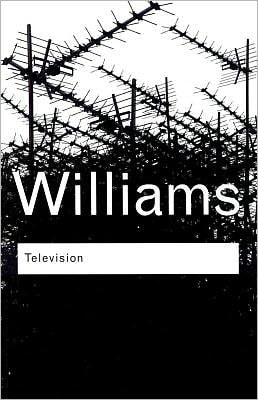
Television: Technology and Cultural Form
0
0
As an Amazon Associate and affiliate partner, Menrva Books earns from qualifying purchases. Learn more
Author Description
Twenty-first century TV offers an apparently endless stream of images, unfolding at high speed. We no longer watch individual programs but flick from channel to channel, absorbing a continuous flow of news, game shows, comedy, drama, movies, advertising and trailers. Television: Technology and Cultural Form was first published in 1974, long before the dawn of multi-channel TV, or the reality and celebrity shows that now pack the schedules. Yet Williams' analysis of television's history, its institutions, programs and practices, and its future prospects, remains remarkably prescient. TV offers an apparently endless engagement with a flood of Williams stresses the importance of technology in shaping the cultural form of television, while always resisting the determinism of Marshall McLuhan's dictum that "the medium is the message". If the medium really is the message, Williams asks, what is left for us to do or say? Williams argues that, on the contrary, we as viewers have the power to disturb, disrupt and to distract the otherwise cold logic of history and technology - not just because television is part of the fabric of our daily lives, but because new technologies continue to offer opportunities, momentarily outside the sway of transnational corporations or the grasp of media moguls, for new forms of self and political expression.
Menrva's Summary
THE THESIS
This work investigates the core question of how television functions as both a technological innovation and a specific cultural form within modern society. Raymond Williams, a foundational figure in cultural studies, challenges the technological determinism prevalent in media theory during the 1970s. By analyzing the institutional, historical, and social practices surrounding television, he argues that the medium is not an autonomous force but a product of complex social and political pressures. Williams asserts that viewers retain agency to disrupt the logic of media systems, suggesting that new technologies provide potential spaces for political and personal expression outside of corporate control.
THE SCOPE MAP
What You Will Find
- Historical analysis of the development of television as a broadcast technology
- Critique of technological determinism and the theories of Marshall McLuhan
- Examination of the institutional structures governing television programming and scheduling
- Theoretical framework for understanding the relationship between media technology and cultural consumption
THE AUTHORITY PERSPECTIVE
Experts and scholars consistently cite this text as a foundational pillar of media and cultural studies. Readers frequently note that while the book was written in 1974, its analytical framework remains highly relevant for understanding contemporary digital media environments.
Page Count:
192
Publication Date:
2004-01-01
Publisher:
Taylor & Francis Group
ISBN-10:
0203426649
ISBN-13:
9780203426647
Sociology
Media Studies
Television broadcasting
Technology
Communication
Social Aspects
Community Tags
Similar Books