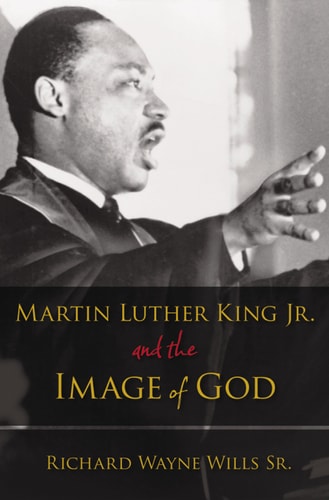
Martin Luther King, Jr., and the Image of God
0
0
As an Amazon Associate and affiliate partner, Menrva Books earns from qualifying purchases. Learn more
Author Description
Scholars universally acknowledge the role that Christian belief played in the social movement engendered by Martin Luther King Jr. Yet few have actually delved into the complexity of King's theology itself. The centrality of one aspect of his theology in particular - imago Dei, the belief that human beings are made in God's image - has been surprisingly overlooked.In this book, Richard W. Wills Sr. offers a comprehensive analysis of King's appeal for civil rights by investigating his understanding of imago Dei. Wills begins by tracing the evolution of this idea through the history of Christian thought, showing the intellectual sources King drew on in constructing his own beliefs. Wills then demonstrates how King employed this idea in his civil rights work. The belief that we are all made in God's image was crucial, Wills shows, to King's understanding of human nature and equality. While King shared with many of his black church forebears the view that humanity's creation by God was a powerful argument for the equality of all people, he also took the concept much further. For King, being made in God's image meant that human beings have not only the right but also the power to reshape society and to build a "beloved community" on earth. Though explicitly grounded in Christian faith, the doctrine of imago Dei provided King with a theological rationale that was capable of addressing the needs of the community well beyond the walls of churches.Wills's thorough reconsideration King's thought makes the case for his importance as a theologian. It convincingly demonstrates that the concept of imago Dei formed the heart of his theology and, in turn, that his theology was central to the unfolding of the civil rights movement.
Menrva's Summary
THE THESIS
How did the theological concept of imago Dei serve as the foundational framework for Martin Luther King Jr.'s civil rights activism and social philosophy? Richard W. Wills Sr., a scholar of theology and ethics, examines the intellectual lineage of the belief that humans are created in God's image. By analyzing King's sermons, writings, and public addresses, Wills argues that this doctrine was not merely a religious sentiment but a functional tool for social transformation and the pursuit of equality.
THE SCOPE MAP
What You Will Find
- Historical evolution of the imago Dei doctrine within Christian thought.
- Analysis of King's synthesis of black church traditions and academic theology.
- Examination of the 'beloved community' as a practical application of divine image theology.
Scope Limits
- The text does not provide a general biography of King's life outside of his theological development.
- It does not offer a broad history of the entire Civil Rights Movement, focusing instead on the specific theological underpinnings of King's leadership.
THE AUTHORITY PERSPECTIVE
Scholars and theologians identify this work as a significant contribution to understanding the intellectual depth of King's public ministry. Readers frequently note the academic density of the prose, which effectively bridges the gap between systematic theology and historical social activism.
Page Count:
258
Publication Date:
2009-01-01
Publisher:
Oxford University Press
ISBN-10:
0190294809
ISBN-13:
9780190294809
History
Religion
Biography
Black Theology
Theology
Civil Rights
African American
Community Tags
Other Editions(3)

Similar Books











Reader Comments
Share Your Thoughts
No comments yet. Be the first to share your thoughts!