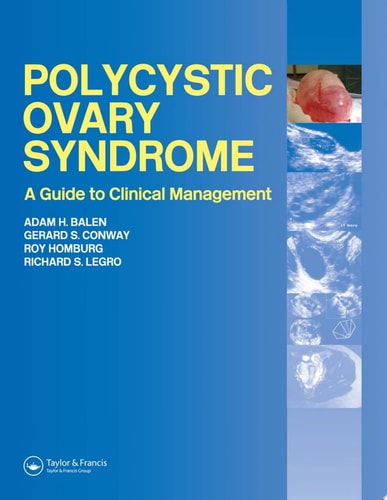
Polycystic Ovary Syndrome: A Guide to Clinical Management
0
0
As an Amazon Associate and affiliate partner, Menrva Books earns from qualifying purchases. Learn more
Author Description
The term polycystic ovary syndrome (peOS) is meant to describe a clinical endocrinopathy characterized by menstrual irregularity and evidence of hyperandrogenism. While recognized since the 1800s, a clinical composite was not constructed until 1935 when Stein and Leventhal reported their findings of seven women with infertility, menstrual dysfunction, hirsutism, and enlarged ovaries. Notably, the ovaries contained numerous multiple cysts and the ovarian capsule was thickened. At the time, this preciseness of definition was sufficient to entitle the entity Stein-Leventhal syndrome. Subsequently, over the intervening years as investigators attempted to un ravel the pathophysiology and genesis of this disorder and the number of reported studies increased, there ensued a gradual and distinct terminologic conversion to polycystic ovary syndrome, which, whether intentional or not, connoted a less well-defined condition. Perhaps this is appropriately so, given the seemingly broadening spectrum of clinical presentations and the continuing debate over what constitutes peos. The expansive new knowledge about peos was discussed to a significant degree at an international symposium organized by Serono Symposia USA and held in Boston in the late spring of 1995. Ovarian physiology, including the fate of the follicular unit, was a central focus with several presentations on the genesis, growth, and death of ovarian cellular components. A discus sion of the regulation of ovarian cell function was also highlighted and comprised a major portion of the program.
Menrva's Summary
THE THESIS
This text investigates the clinical definition, pathophysiology, and management strategies for Polycystic Ovary Syndrome (PCOS). Richard S. Legro, a recognized expert in reproductive endocrinology, synthesizes findings from international symposia to address the historical evolution of the diagnosis and the complex hormonal mechanisms underlying the disorder. The work provides a structured framework for clinicians to navigate the broadening spectrum of patient presentations and the ongoing debates regarding diagnostic criteria.
THE SCOPE MAP
What You Will Find
- Historical analysis of the Stein-Leventhal syndrome and its transition to modern PCOS terminology
- Detailed examination of ovarian physiology, including follicular unit development and cellular death
- Regulatory mechanisms of ovarian cell function and their impact on hyperandrogenism
- Clinical management approaches based on data presented at international medical symposia
THE AUTHORITY PERSPECTIVE
Medical professionals and researchers frequently cite this text as a foundational resource for understanding the physiological complexities of PCOS. Experts highlight the clinical density of the prose, noting its utility for practitioners seeking a rigorous, evidence-based approach to endocrine disorders.
Page Count:
240
Publication Date:
2007-01-01
Publisher:
Taylor & Francis Ltd
ISBN-10:
0203506154
ISBN-13:
9780203506158
Health
Categories
Kindle eBooks
Medical
Endocrinology
Medicine
Gynecology
Kindle Store
Reference
Community Tags
Similar Books