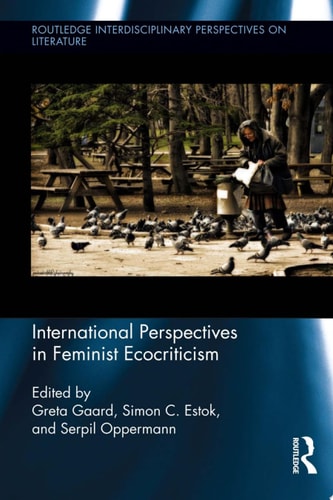
International Perspectives In Feminist Ecocriticism
0
0
As an Amazon Associate and affiliate partner, Menrva Books earns from qualifying purchases. Learn more
Author Description
"Exploring environmental literature from a feminist perspective, this volume presents a diversity of feminist ecocritical approaches to affirm the continuing contributions, relevance, and necessity of a feminist perspective in environmental literature, culture, and science. Feminist ecocriticism has a substantial history, with roots in second- and third-wave feminist literary criticism, women's environmental writing and social change activisms, and eco-cultural critique, and yet both feminist and ecofeminist literary perspectives have been marginalized. The essays in this collection build on the belief that the repertoire of violence (conceptual and literal) toward nature and women comprising our daily lives must become central to our ecocritical discussions, and that basic literacy in theories about ethics are fundamental to these discussions. The book offers an international collection of scholarship that includes ecocritical theory, literary criticism, and ecocultural analyses, bringing a diversity of perspectives in terms of gender, sexuality, and race. Reconnecting with the histories of feminist and ecofeminist literary criticism, and utilizing new developments in postcolonial ecocriticism, animal studies, queer theory, feminist and gender studies, cross-cultural and international ecocriticism, this timely volume develops a continuing and international feminist ecocritical perspective on literature, language, and culture."--Publisher's website.
Menrva's Summary
THE THESIS
This volume investigates how feminist ecocritical frameworks can address the systemic marginalization of gender and environmental concerns within literary and cultural studies. The editors, Greta Gaard, Serpil Oppermann, and Simon C. Estok, curate a collection of essays that synthesize historical feminist theory with contemporary postcolonial and animal studies. By arguing that the conceptual violence directed toward women and nature is inextricably linked, the authors establish a methodology for integrating ethical literacy into environmental discourse.
THE SCOPE MAP
What You Will Find
- Analysis of second and third wave feminist literary criticism in relation to environmental writing.
- Integration of queer theory, postcolonial ecocriticism, and animal studies into environmental analysis.
- Cross-cultural and international perspectives on gender, sexuality, and race within ecocultural critique.
- Theoretical frameworks for addressing the intersection of social change activism and environmental literature.
THE AUTHORITY PERSPECTIVE
Scholars and students of environmental humanities frequently identify this collection as a vital resource for understanding the evolution of ecofeminist thought. The text is noted for its academic rigor and its success in bridging the gap between traditional literary criticism and modern intersectional environmentalism.
Page Count:
0
Publication Date:
2013-01-01
Publisher:
Taylor & Francis Group
ISBN-10:
020352084X
ISBN-13:
9780203520840
Gender Studies
Literary Criticism
Feminism
In literature
Feminism and literature
Ecocriticism
Community Tags
Other Editions(5)



Similar Books





Reader Comments
Share Your Thoughts
No comments yet. Be the first to share your thoughts!