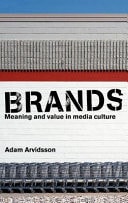
Brands: Meaning and Value in Media Culture
0
0
As an Amazon Associate and affiliate partner, Menrva Books earns from qualifying purchases. Learn more
Author Description
Drawing On Rich Empirical Material, This Revealing Book Builds Up A Critical Theory, Arguing That Brands Have Become An Important Tool For Transforming Everyday Life Into Economic Value. When Branding Lifestyles Or Value Complexes Onto Their Products, Companies Assume That Consumers Desire Products For Their Ability To Give Meaning To Their Lives. Yet, Brands Also Have A Key Function Within Managerial Strategy. Examining The History Of Audience And Market Research, Marketing Thought And Advertising Strategy; The First Part Of This Book Traces The Historical Development Of Branding, Whilst The Second Part Evaluates New Media, Contemporary Management And Overall Media Economics To Present The First Systematic Theory Of Brands: The Brand As A Key Institution In Information Capitalism. It Includes Chapters On: Consumption Marketing Brand Management Online Branding The Brand As Informational Capital. Richly Illustrated With Case Studies From Market Research, Advertising, Shop Displays, Mobile Phones, The Internet And Virtual Companies, This Outstanding Book Is Essential Reading For Students And Researchers Of The Sociology Of Media, Cultural Studies, Advertising And Consumer Studies And Marketing.
Menrva's Summary
THE THESIS
This book investigates how brands function as a central institution within information capitalism, transforming everyday life and consumer meaning into measurable economic value. Adam Arvidsson, a scholar in media and cultural studies, synthesizes historical analysis of marketing and advertising with contemporary economic theory. He argues that the modern brand is not merely a commercial identifier but a complex mechanism that captures the productive potential of social life. By examining the evolution of market research and management strategy, the author provides a systematic framework for understanding the brand as a primary driver of value in the digital age.
THE SCOPE MAP
What You Will Find
- Historical analysis of audience research, advertising strategy, and marketing thought.
- A theoretical framework defining the brand as informational capital.
- Case studies covering diverse media, including mobile technology, the internet, and virtual corporate structures.
- Examination of the intersection between consumer lifestyle desires and managerial economic objectives.
THE AUTHORITY PERSPECTIVE
Scholars in sociology and media studies frequently cite this work as a foundational text for understanding the commodification of social meaning. Readers often note the academic density of the prose, which is well-suited for advanced students and researchers in the field of cultural economics.
Page Count:
168
Publication Date:
2006-01-01
Publisher:
Taylor & Francis Group
ISBN-10:
0203640063
ISBN-13:
9780203640067
Business
Economics
Brand name products
Sociology
Media Studies
Marketing