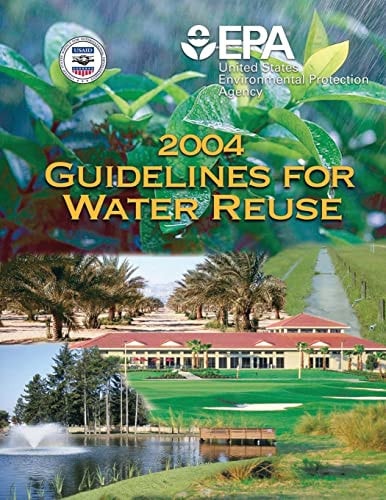
2004 Guidelines for Water Reuse
0
0
As an Amazon Associate and affiliate partner, Menrva Books earns from qualifying purchases. Learn more
Author Description
In an effort to help meet growing demands being placed on available water supplies, many communities throughout the U.S. and the world are turning to water reclamation and reuse. Water reclamation and reuse offer an effective means of conserving our limited high-quality freshwater supplies while helping to meet the ever growing demands for water. For many years, effluent discharges have been accepted as an important source for maintaining minimum stream flows. The investment in treatment technologies required to meet restrictive discharge limits has lead an increasing number of industries and communities to consider other uses for their treated wastewater effluents as a means to recover at least a part of this investment. Further, as sources of water supplies have become limited, there has been greater use and acceptance of reclaimed wastewater effluents as an alternative source of water for a wide variety of applications, including landscape and agricultural irrigation, toilet and urinal flushing, industrial processing, power plant cooling, wetland habitat creation, restoration and maintenance, and groundwater recharge. In some areas of the country, water reuse and dual water systems with purple pipe for distribution of reclaimed water have become fully integrated into local water supplies. The "2004 Guidelines for Water Reuse" examines opportunities for substituting reclaimed water for potable water supplies where potable water quality is not required. It presents and summarizes recommended water reuse guidelines, along with supporting information, as guidance for the benefit of the water and wastewater utilities and regulatory agencies, particularly in the U.S. The document updates the 1992 Guidelines document by incorporating information on water reuse that has been developed since the 1992 document was issued. This revised edition also expands coverage of water reuse issues and practices in other countries.
Menrva's Summary
THE THESIS
The growing scarcity of freshwater supplies necessitates the exploration and implementation of water reuse strategies. The U.S. Agency for Development and the U.S. Environmental Agency present updated guidelines for water reclamation and reuse, aiming to conserve high-quality freshwater resources and meet increasing water demands. This document, an update to the 1992 guidelines, incorporates advancements in treatment technologies and expands coverage of international practices, offering guidance for utilities and regulatory agencies on substituting reclaimed water for potable uses where appropriate.
THE SCOPE MAP
- Examination of opportunities for substituting reclaimed water for potable water supplies.
- Summary of recommended water reuse guidelines and supporting information.
- Updated information on water reuse developed since the 1992 document.
- Expanded coverage of water reuse issues and practices in other countries.
- Guidance for water and wastewater utilities and regulatory agencies.
- Discussion of applications including irrigation, toilet flushing, industrial processing, and groundwater recharge.
THE AUTHORITY PERSPECTIVE
The '2004 Guidelines for Water Reuse' serves as a comprehensive resource for professionals involved in water management and environmental regulation. It addresses the increasing global reliance on water reclamation and reuse as a critical strategy for conserving limited freshwater supplies and meeting escalating water demands. The document provides updated guidelines and practical information, reflecting advancements in treatment technologies and international practices, thereby supporting informed decision-making for utilities and agencies.
Page Count:
480
Publication Date:
2015-01-18
Publisher:
CreateSpace Independent Publishing Platform
ISBN-10:
1507616163
ISBN-13:
9781507616161
Non-Fiction
Science & Technology
Public Health
Engineering
Community Tags
Similar Books