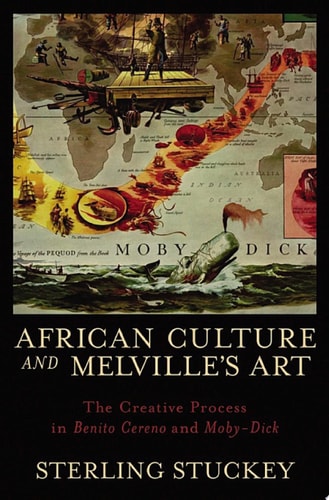
African Culture and Melville's Art: The Creative Process in Benito Cereno and Moby-Dick
0
0
As an Amazon Associate and affiliate partner, Menrva Books earns from qualifying purchases. Learn more
Author Description
Although Herman Melville's masterworks Moby-Dick and Benito Cereno have long been the subject of vigorous scholarly examination, the impact of African culture on these works has received surprisingly little critical attention. Presenting a reappraisal of these two pieces of fiction, Sterling Stuckey reveals how African customs and rituals heavily influenced one of America's greatest novelists. The Melville that emerges in this innovative, intertextual study is one profoundly shaped by the vibrant African-influenced music and dance culture of nineteenth-century America. Drawing on extensive research, Stuckey reveals how celebrations of African culture by black Americans, such as the Pinkster festival and the Ring Shout dance form, permeated Melville's environs during his formative years and found their way into his finest fiction. Also demonstrated is the extent to which the author of Moby-Dick is indebted to Frederick Douglass's depiction of music, especially the blues, in his classic slave narrative. Connections between Melville's work and African culture are also extended beyond America to the African continent itself. With readings of hitherto unexplored chapters in Delano's Voyages and Travels in the Northern and Southern Hemispheres and other nonfiction sources--such as Joseph Dupuis's Journal of a Residence in Ashantee --Stuckey links Benito Cereno and Moby-Dick, pinpointing the sources from which Melville drew to fashion major characters that appear aboard both the Pequod and the San Dominick. Combining inventive literary and historical analysis, Stuckey shows how myriad aspects of African culture coalesced to create the unique vision conveyed in Moby-Dick and Benito Cereno. Ultimately, African Culture and Melville's Art provides a wealth of insight into the novelist's expressive power and the development of his distinct cross-cultural aesthetic.
Menrva's Summary
THE THESIS
This study investigates the extent to which African cultural practices and traditions influenced the creative development and thematic content of Herman Melville's major works. Sterling Stuckey, a historian specializing in African American culture, utilizes an interdisciplinary approach to bridge the gap between nineteenth-century American literary production and the African diaspora's cultural contributions. By analyzing Melville's exposure to specific rituals and music, the author argues that these influences were foundational to the construction of characters and narratives in both Moby-Dick and Benito Cereno.
THE SCOPE MAP
What You Will Find
- Analysis of the Pinkster festival and the Ring Shout dance form as cultural influences.
- Comparative study of Frederick Douglass's slave narratives and Melville's prose.
- Examination of non-fiction travelogues, including Joseph Dupuis's Journal of a Residence in Ashantee.
- Intertextual analysis linking historical African customs to specific character archetypes.
Scope Limits
- The study focuses primarily on the specific influence of African culture rather than a comprehensive literary biography of Melville.
- It does not provide an exhaustive analysis of all of Melville's bibliography, concentrating instead on two specific texts.
THE AUTHORITY PERSPECTIVE
Scholars recognize this work as a significant contribution to the field of American literary studies for its focus on cross-cultural influences. Readers frequently note the academic density of the prose and the author's meticulous archival research.
Page Count:
167
Publication Date:
2008-01-01
Publisher:
Oxford University Press
ISBN-10:
0190451769
ISBN-13:
9780190451769
History
African American
English
Literary Criticism
Cultural History
African history
American
Academic
English & College Success
Community Tags
Similar Books