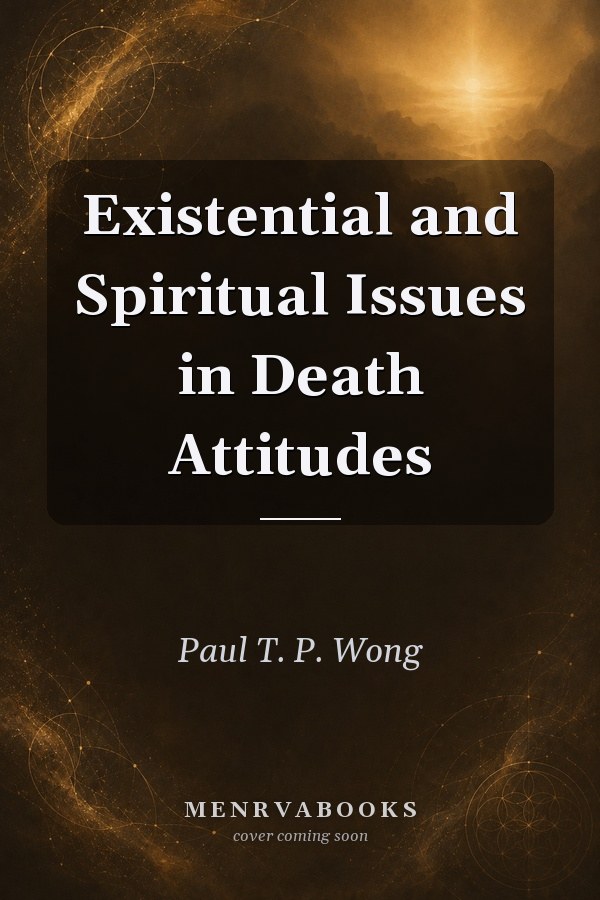
Existential and Spiritual Issues in Death Attitudes
0
0
As an Amazon Associate and affiliate partner, Menrva Books earns from qualifying purchases. Learn more
Author Description
Existential and Spiritual Issues in Death Attitudes provides: an in-depth examination of death attitudes, existentialism, and spirituality and their relationships; a review of the major theoretical models; clinical applications of these models to issues such as infertility, bereavement, anxiety, and suicide; and an introduction to meaning management theory and how it can be applied to grief counseling. In this new volume, death is treated both as a threat to meaning and as an opportunity to create meaning. The first section introduces theory and methodology to connect the latest empirical research on death attitudes to the philosophical/psychological existential and spirituality literature. Part II presents the latest empirical research on subjects such as end-of-life decisions and living with HIV. The final section considers therapeutic applications to issues including suicide, infertility, bereavement, and anxiety. The concluding chapter highlights the book’s common themes and provides questions to encourage further investigation of the most critical topics. Psychologists, counselors, social workers, physicians, nurses, and religious leaders, as well as academics in the fields of psychology, gerontology, philosophy, religion, counseling, social work, sociology, and medicine will value this new resource. Main points summarize important ideas of each chapter, making it an appropriate text in courses on death and dying and/or and spirituality. Its clinical applications will appeal to practicing professionals.
Menrva's Summary
THE THESIS
This volume investigates the complex interplay between existential philosophy, spiritual belief systems, and individual attitudes toward mortality. The authors, Adrian Tomer, Grafton T. Eliason, and Paul T. P. Wong, synthesize empirical psychological research with existential theory to provide a comprehensive framework for understanding how humans construct meaning in the face of death. By bridging the gap between abstract philosophical inquiry and clinical practice, the text offers a structured approach to managing end-of-life anxiety and grief.
THE SCOPE MAP
What You Will Find
- Theoretical models connecting existentialism and spirituality to death attitudes
- Meaning management theory as a framework for grief counseling
- Empirical research on end-of-life decision making and chronic illness
- Clinical applications for suicide prevention, bereavement, and infertility
THE AUTHORITY PERSPECTIVE
Experts identify this work as a foundational resource for practitioners in psychology, social work, and medicine who require a bridge between theoretical research and clinical application. Readers frequently note the academic density of the prose, which serves as a primary text for advanced courses in death and dying.
Page Count:
496
Publication Date:
2007-01-01
Publisher:
Taylor & Francis Group
ISBN-10:
020380967X
ISBN-13:
9780203809679
Psychology
Religion
Philosophy
Sociology
Medicine
Counseling
Psychological aspects
Gerontology