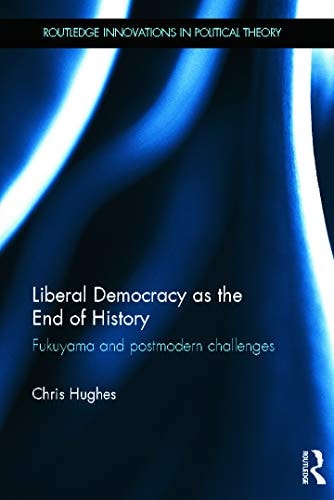
Liberal Democracy as the End of History: Fukuyama and Postmodern Challenges
0
0
As an Amazon Associate and affiliate partner, Menrva Books earns from qualifying purchases. Learn more
Author Description
Introduction -- Methodology: An Approach To Philosophical Analysis -- Fukuyama I: The Concept Of A History With Universal Direction And End Point -- Fukuyama Ii: Why Does History End In Liberal Democracy? -- Postmodern Perspectives On The Flow Of Time -- Questioning The Universality Of Human Nature -- The Myth Of The Individual: How I Is Constructed And Gives An Account Of Itself -- A Theory Of A History Which Ends In Liberal Democracy Through A Reading Of Fukuyama And Postmodernism. Chris Hughes. Includes Bibliographical References And Index.
Menrva's Summary
THE THESIS
This work investigates whether Francis Fukuyama’s assertion regarding the end of history in liberal democracy remains tenable when subjected to the critiques of postmodern philosophy. Chris Hughes employs a structured philosophical analysis to evaluate the concept of universal history, contrasting Fukuyama’s teleological framework with postmodern skepticism regarding human nature and the construction of the individual. The text systematically deconstructs the assumptions inherent in the 'end of history' thesis to determine if liberal democracy can withstand contemporary theoretical challenges.
THE SCOPE MAP
What You Will Find
- A detailed examination of Fukuyama’s core arguments concerning historical directionality and the finality of liberal democracy.
- A critical analysis of postmodern perspectives on the flow of time and the nature of historical progress.
- An investigation into the philosophical status of human nature and the construction of the individual self.
- A synthesis of political theory and postmodern critique to assess the validity of universalist historical narratives.
THE AUTHORITY PERSPECTIVE
Scholars and students of political philosophy frequently cite this text for its clear methodological approach to comparing competing ideological frameworks. The book is recognized as a useful resource for those seeking to understand the intersection of classical liberal theory and postmodern critical thought.
Page Count:
228
Publication Date:
2011-01-01
Publisher:
Routledge
ISBN-10:
0203802179
ISBN-13:
9780203802175
Philosophy
History
Liberalism
Postmodernism
Political Theory
Community Tags
Similar Books