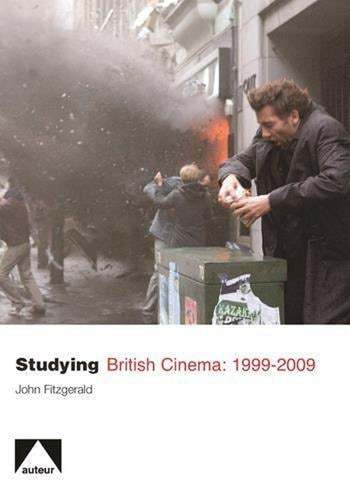
Studying British Cinema: 1999-2009
0
0
As an Amazon Associate and affiliate partner, Menrva Books earns from qualifying purchases. Learn more
Author Description
Studying British Cinema: 1999-2009 adopts a number of approaches to popularist, mainstream, and esoteric arthouse films. The book considers the institutional and financial factors that influence U.K. film production and assesses issues of genre, representation, authorship, and social, economic, and political contexts. The growth of coproduction is considered by looking at both Aardman Animation and the Harry Potter franchise (2001 to the present). Representations of social class factor into films as diverse as Red Road (2006) and Love, Actually (2003), and developments in social realism, primarily by female directors, are examined. The revival of the British science fiction and horror film is also covered in detail, and ethnic groups and new economic migrants are viewed in two separate chapters, as well as the growth of films concerning British protagonists in Africa. One section offers a close analysis of two of the most important directors of the decade: Michael Winterbottom and Shane Meadows.
Menrva's Summary
THE THESIS
This book investigates the multifaceted landscape of British cinema between 1999 and 2009, exploring its commercial, artistic, and social dimensions. FitzGerald examines the institutional and financial forces shaping UK film production, alongside critical issues of genre, representation, authorship, and the broader socio-political contexts. The analysis includes the rise of co-productions, exemplified by Aardman Animation and the Harry Potter franchise, and delves into representations of social class in films like 'Red Road' and 'Love, Actually'. It also covers developments in social realism, the resurgence of British science fiction and horror, and the portrayal of ethnic groups and migrants.
THE SCOPE MAP
- Analysis of institutional and financial factors influencing UK film production.
- Examination of genre, representation, authorship, and socio-political contexts.
- Case studies of co-productions: Aardman Animation and the Harry Potter franchise.
- Exploration of social class representation in films such as 'Red Road' and 'Love, Actually'.
- Detailed look at developments in social realism, particularly by female directors.
- Coverage of the revival of British science fiction and horror films.
- Chapters dedicated to representations of ethnic groups and new economic migrants.
- Close analysis of directors Michael Winterbottom and Shane Meadows.
THE AUTHORITY PERSPECTIVE
The book offers a comprehensive academic survey of British cinema during a pivotal decade, examining both mainstream successes and arthouse productions. It is structured to provide a detailed understanding of the industry's economic and creative forces, alongside its engagement with social and political themes. The inclusion of specific case studies and director analyses grounds the broader theoretical discussions. This work serves as a valuable resource for students and scholars interested in the evolution of British film.
Page Count:
256
Publication Date:
2010-08-06
Publisher:
Auteur Publishing in partnership with Liverpool University Press
ISBN-10:
1906733120
ISBN-13:
9781906733124
Non-Fiction
Science Fiction
Horror
Social Realism
British Cinema
Film Studies
Community Tags
Similar Books