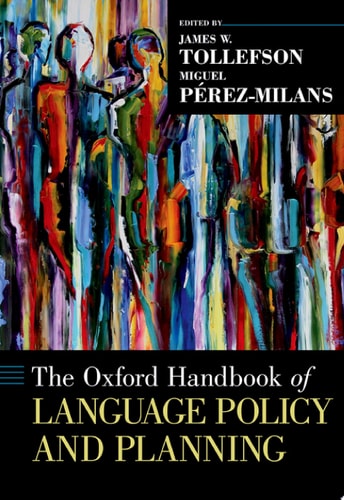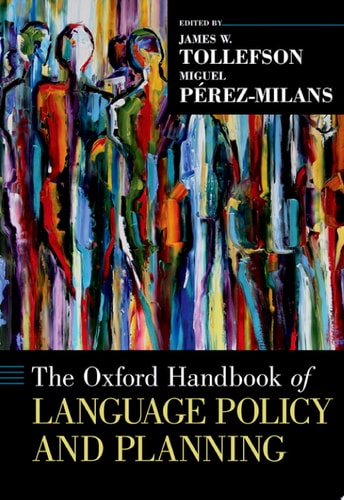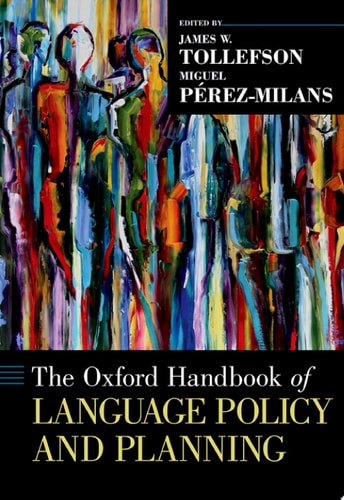
The Oxford Handbook of Language Policy and Planning
0
0
As an Amazon Associate and affiliate partner, Menrva Books earns from qualifying purchases. Learn more
Author Description
This Handbook provides a state-of-the-art account of research in language policy and planning (LPP). Through a critical examination of LPP, the Handbook offers new direction for a field in theoretical and methodological turmoil as a result of the socio-economic, institutional, and discursive processes of change taking place under the conditions of Late Modernity. Late Modernity refers to the widespread processes of late capitalism leading to the selective privatization of services (including education), the information revolution associated with rapidly changing statuses and functions of languages, the weakening of the institutions of nation-states (along with the strengthening of non-state actors), and the fragmentation of overlapping and competing identities associated with new complexities of language-identity relations and new forms of multilingual language use. As an academic discipline in the social sciences, LPP is fraught with tensions between these processes of change and the still-powerful ideological framework of modern nationalism. It is an exciting and energizing time for LPP research.This Handbook propels the field forward, offering a dialogue between the two major historical trends in LPP associated with the processes of Modernity and Late Modernity: the focus on continuity behind the institutional policies of the modern nation-state, and the attention to local processes of uncertainty and instability across different settings resulting from processes of change. The Handbook takes great strides toward overcoming the long-standing division between "top-down" and "bottom-up" analysis in LPP research, setting the stage for theoretical and methodological innovation.Part I defines alternative theoretical and conceptual frameworks in LPP, emphasizing developments since the ethnographic turn, including: ethnography in LPP; historical-discursive approaches; ethics, normative theorizing, and transdisciplinary methods; and the renewed focus on socio-economic cl
Menrva's Summary
THE THESIS
This handbook investigates the current state of language policy and planning (LPP) research as it navigates the theoretical and methodological tensions created by the socio-economic and institutional shifts of Late Modernity. Edited by James W. Tollefson and Miguel Pérez-Milans, the text assembles contributions from leading scholars to address how global processes—such as late capitalism, the information revolution, and the fragmentation of nation-state authority—impact language use and identity. The volume argues for a synthesis between traditional top-down institutional analysis and bottom-up ethnographic approaches to better understand contemporary linguistic dynamics.
THE SCOPE MAP
What You Will Find
- Theoretical frameworks including historical-discursive approaches and normative theorizing.
- Methodological discussions on the ethnographic turn in LPP research.
- Analyses of language-identity relations within the context of globalized, multilingual societies.
- Explorations of the intersection between language policy and socio-economic processes like privatization.
Scope Limits
- The text does not provide a comprehensive history of every national language policy ever enacted.
- It focuses primarily on academic and theoretical advancements rather than serving as a practical manual for policy implementation.
THE AUTHORITY PERSPECTIVE
Scholars and students of linguistics frequently cite this volume as a definitive reference for understanding the current evolution of the field. Experts highlight the text's academic density and its success in bridging the divide between institutional policy studies and localized ethnographic research.
Page Count:
780
Publication Date:
2018-06-04
Publisher:
Oxford University Press
ISBN-10:
0190458895
ISBN-13:
9780190458898
Education Policy
Language Policy
Reference
Linguistics
Community Tags
Similar Books