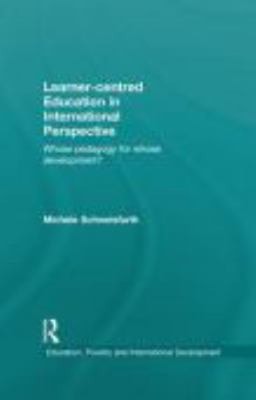
Learner-centred Education in International Perspective
0
0
As an Amazon Associate and affiliate partner, Menrva Books earns from qualifying purchases. Learn more
Author Description
Is Learner-centred Education Appropriate For All Societies And Classrooms? Learner-centred Education (lce) Is A Travelling Policy, Widely Promoted By International Agencies And National Governments. Arguments In Favour Of This Pedagogical Tradition Refer To Theories And Evidence From Cognitive Psychology, Claiming That All Learners Can Benefit Equally From Its Judicious Use. Beyond The Benefits To The Individual However, Lie A Set Of Assumptions About Learner-centred Education As A Foundation For The Building Of Democratic Citizens And Societies, Suitable For Economies Of The Future. These Promises Have Been Questioned By Critics Who Doubt That It Is Appropriate In All Cultural And Resource Contexts, And There Is Considerable Evidence In The Global South Of Perennial Problems Of Implementation.in The Light Of These Debates, Is Lce Still A Good Development Bet? This Book Provides An Authoritative And Balanced Investigation Of These Issues, Exploring The Contextual Factors From Global Movements To Local Resourcing Realities Which Have Fuelled It As A Discourse And Affected Its Practice. In The Light Of The Theoretical Underpinnings And Research Evidence, The Book Addresses Pressing Questions: To What Extent Is Learner-centred Education A Sound Choice For Policy And Practice In Developing Countries? And If It Is A Sound Choice, Under Which Conditions Is It A Viable One? The Book Is Divided Into Three Key Parts:- Learner-centred Education As A Global Phenomenon - Learner-centred Education In Lower And Middle-income Countries - Lessons And Resolutions This Book Provides A Much-needed Fresh Analysis Of The Concept And Practice Of Lce. It Will Be Valuable Reading For Academics And Post-graduates With A Focus On Comparative And International Education, Along With Policy-makers In Developing Countries And Development Agencies-- Provided By Publisher.
Menrva's Summary
THE THESIS
Is learner-centred education (LCE) a universally appropriate pedagogical model, or does its implementation fail when transplanted into diverse cultural and resource-constrained environments? Michele Schweisfurth, an expert in international and comparative education, evaluates the global promotion of LCE by international agencies against the practical realities of classrooms in the Global South. By synthesizing cognitive psychology theories with empirical evidence from various national contexts, the author constructs a framework to determine the viability of LCE as a policy choice for developing economies.
THE SCOPE MAP
What You Will Find
- Analysis of LCE as a global policy discourse promoted by international organizations.
- Comparative case studies examining implementation challenges in lower and middle-income countries.
- Evaluation of the link between pedagogical practices and the development of democratic citizenship.
- Assessment of resource-based constraints and cultural factors affecting classroom practice.
THE AUTHORITY PERSPECTIVE
Experts in the field of international development and education recognize this work as a balanced, critical examination of a widely debated pedagogical trend. Readers frequently note the academic rigor and the author's ability to navigate the tension between theoretical ideals and the practical limitations of global education policy.
Page Count:
180
Publication Date:
2013-01-01
Publisher:
Taylor & Francis Group
ISBN-10:
0203817435
ISBN-13:
9780203817438
Pedagogy
Student-centered Learning
Social Science
Education
Democracy and education
International Development
Comparative Education
Community Tags
Other Editions(2)
Similar Books





Reader Comments
Share Your Thoughts
No comments yet. Be the first to share your thoughts!