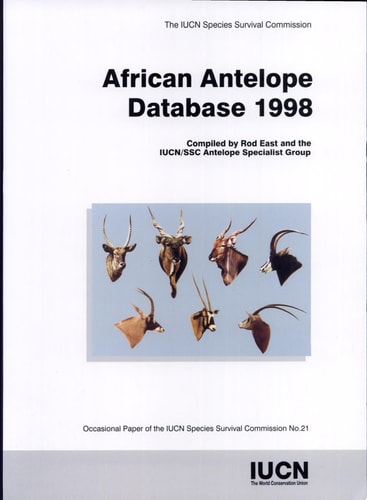
African Antelope Database 1998
0
0
As an Amazon Associate and affiliate partner, Menrva Books earns from qualifying purchases. Learn more
Author Description
Although most antelope species still exist in large numbers in sub-Saharan Africa (some in hundreds of thousands), up to three-quarters of the species are in decline. Threats to their survival arise from the rapid growth of human and livestock populations, with consequent degradation and destruction of natural habitats, and excessive offtake by meat hunters. In addition, some parts of Africa are mow almost completely devoid of large wild animals because of uncontrolled slaughter during recent civil wars. This report presents the information currently held by the IUCN/SSC Antelope Specialist Group on the conservation status of each antelope species (and selected subspecies) in sub-Saharan Africa. Key areas have been identified for the conservation of representative antelope communities. While external donors make the greatest contributions to the conservation of antelopes, greater recognition of wildlife conservation in national and regional development plans is often a critically important requirement.
Menrva's Summary
THE THESIS
This report details the conservation status of sub-Saharan African antelopes and identifies critical areas for their protection. The IUCN/SSC Antelope Specialist Group presents current data on antelope species and selected subspecies, highlighting that while many species still exist in large numbers, up to three-quarters are experiencing declines. Primary threats include habitat degradation and destruction due to human and livestock population growth, and overhunting for meat. The report also addresses the impact of civil wars on wildlife populations and emphasizes the need for greater recognition of wildlife conservation in national and regional development plans, alongside external donor contributions.
THE SCOPE MAP
- Conservation status of each antelope species and selected subspecies in sub-Saharan Africa.
- Analysis of threats including habitat degradation, human and livestock population growth, and overhunting.
- Identification of key areas for the conservation of representative antelope communities.
- Discussion on the role of external donors and the importance of national and regional development plans for conservation.
THE AUTHORITY PERSPECTIVE
This report is a technical assessment by the IUCN/SSC Antelope Specialist Group, providing critical data on the conservation status of African antelopes. It outlines the significant threats facing these species, such as habitat loss and overhunting, and identifies priority areas for conservation efforts. The publication underscores the necessity of integrating wildlife conservation into broader development strategies, in addition to the support provided by external funding.
Page Count:
434
Publication Date:
1999-01-01
Publisher:
IUCN
ISBN-10:
2831704774
ISBN-13:
9782831704777
Non-Fiction
Animals
Science
Mammals
Zoology
Africa
Wildlife conservation
Community Tags
Similar Books