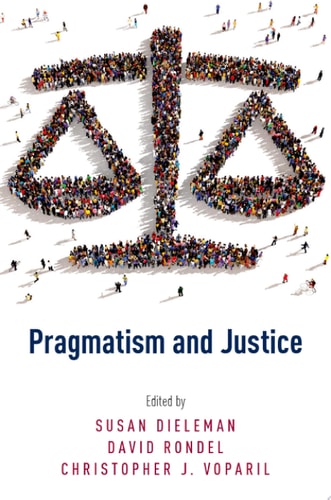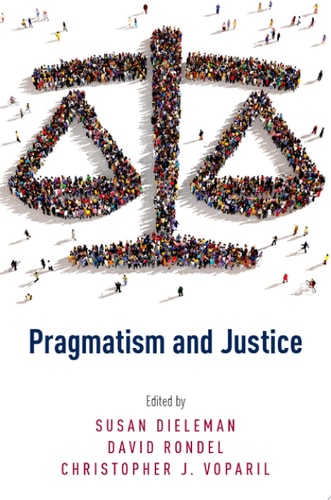
Pragmatism and Justice
0
0
As an Amazon Associate and affiliate partner, Menrva Books earns from qualifying purchases. Learn more
Author Description
The essays in this volume answer to anxieties that the pragmatist tradition has had little to say about justice. While both the classical and neo-pragmatist traditions have produced a conspicuously small body of writing about the idea of justice, a common subtext of the essays in this volume is that there is in pragmatist thought a set of valuable resources for developing pragmatist theories of justice, for responding profitably to concrete injustices, and for engaging with contemporary, prevailing, liberal theories of justice.Despite the absence of conventionally philosophical theories of justice in the pragmatist canon, the writings of many pragmatists demonstrate an obvious sensitivity and responsiveness to injustice. Many pragmatists were and are moved by a deep sense of justice-by an awareness of the suffering of people, by the need to build just institutions, and a search for a tolerant and non-discriminatory culture that regards all people as equals. Three related and mutually reinforcing ideas to which virtually all pragmatists are committed can be discerned: a prioritization of concrete problems and real-world injustices ahead of abstract precepts; a distrust of a priori theorizing (along with a corresponding fallibilism and methodological experimentalism); and a deep and persistent pluralism, both in respect to what justice is and requires, and in respect to how real-world injustices are best recognized and remedied.Ultimately, Pragmatism and Justice asserts that pragmatism gives us powerful resources for understanding the idea of justice more clearly and responding more efficaciously to a world rife with injustice.
Menrva's Summary
THE THESIS
This volume investigates whether the pragmatist tradition possesses the necessary conceptual resources to address contemporary questions of justice. The editors, Christopher Voparil, David Rondel, and Susan Dieleman, curate a collection of essays that challenge the notion that pragmatism is silent on justice. By examining the works of classical and neo-pragmatists, the authors argue that a commitment to concrete problem-solving, fallibilism, and pluralism provides a robust framework for engaging with modern liberal theories and real-world social inequities.
THE SCOPE MAP
What You Will Find
- Analysis of classical and neo-pragmatist texts regarding social and political justice
- A comparative framework between pragmatist thought and prevailing liberal theories
- Methodological discussions on experimentalism and fallibilism in social reform
Scope Limits
- The text does not provide a single, unified pragmatist theory of justice
- It does not offer a comprehensive history of all pragmatist political thought
THE AUTHORITY PERSPECTIVE
Scholars and students of political philosophy frequently cite this collection as a necessary intervention in the discourse surrounding pragmatism's relevance to ethics. Readers often note the academic density of the prose, which serves as a rigorous resource for those looking to bridge the gap between abstract pragmatist methodology and concrete social justice applications.
Page Count:
354
Publication Date:
2017-04-21
Publisher:
Oxford University Press
ISBN-10:
0190459247
ISBN-13:
9780190459246
Philosophy
Ethics
Social justice
Political Theory
Pragmatism