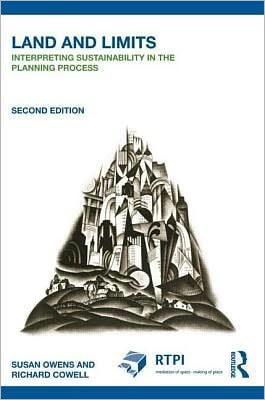
Land and Limits: Interpreting Sustainability in the Planning Process
0
0
As an Amazon Associate and affiliate partner, Menrva Books earns from qualifying purchases. Learn more
Author Description
The first edition of this seminal book was written at a time of rapidly growing interest in the potential for land use planning to deliver sustainable development, and explored the connections between the two and implications for public policy. In the decade since the book was first conceived, environmental imperatives have risen still further up the policial agenda and land use conflicts have intensified, lending even greater importance to the authors' research.In a rigorous discussion of concepts, policy instruments and contemporary planning dilemmas, the authors challenge prevailing assumptions about planning for sustainability. After charting the remarkable growth in expectations of planning, they show how attempts to interpret sustainability must lead to fundamental moral and political choices.
Menrva's Summary
THE THESIS
This book investigates the complex relationship between land use planning and the practical implementation of sustainable development goals within public policy. Susan E. Owens, a recognized expert in environmental planning and policy, utilizes a rigorous analytical framework to examine how planning systems attempt to reconcile competing environmental, social, and economic interests. The text argues that sustainability is not merely a technical challenge but a process requiring fundamental moral and political decision-making, challenging the assumption that planning can easily resolve deep-seated land use conflicts.
THE SCOPE MAP
What You Will Find
- An examination of the evolution of land use planning in the context of environmental policy.
- A critical analysis of policy instruments used to manage sustainable development.
- Case studies and theoretical discussions regarding contemporary planning dilemmas.
- A framework for understanding the moral and political choices inherent in land management.
THE AUTHORITY PERSPECTIVE
Experts and academics frequently cite this work as a foundational text for understanding the intersection of planning theory and environmental governance. Readers often note the academic density of the prose, which provides a comprehensive look at the limitations and potential of planning systems in modern policy.
Page Count:
220
Publication Date:
2011-01-01
Publisher:
Routledge
ISBN-10:
0203832221
ISBN-13:
9780203832226
urban planning
Sustainability
Public Policy
Land Use
Community Tags
Similar Books