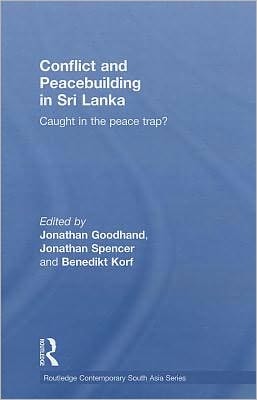
Conflict and Peacebuilding in Sri Lanka: Caught in the Peace Trap?
0
0
As an Amazon Associate and affiliate partner, Menrva Books earns from qualifying purchases. Learn more
Author Description
The period between 2001 and 2006 saw the rise and fall of an internationally supported effort to bring a protracted violent conflict in Sri Lanka to a peaceful resolution. A ceasefire agreement, signed in February 2002, was followed by six rounds of peace talks, but growing political violence, disagreements over core issues and a fragmentation of the constituencies of the key parties led to an eventual breakdown. In the wake of the failed peace process a new government pursued a highly effective ‘war for peace’ leading to the military defeat of the LTTE on the battlefields of the north east in May 2009. This book brings together a unique range of perspectives on this problematic and ultimately unsuccessful peace process.The contributions are based upon extensive field research and written by leading Sri Lankan and international researchers and practitioners. The framework of ‘liberal peacebuilding’ provides an analytical starting point for exploring the complex and unpredictable interactions between international and domestic players during the war-peace-war period. The lessons drawn from the Sri Lankan case have important implications in the context of wider debates on the ‘liberal peace’ and post conflict peacebuilding – particularly as these debates have largely been shaped by the ‘high profile’ cases such as Kosovo, Afghanistan and Iraq. This book is of interest not only to Sri Lanka specialists but also to the wider policy/practitioner audience, and is a useful contribution to South Asian studies.
Menrva's Summary
THE THESIS
This book investigates the failure of the 2001-2006 peace process in Sri Lanka and the subsequent collapse into renewed conflict. Jonathan Goodhand, a scholar specializing in conflict and development, compiles research from various experts to analyze why international intervention failed to prevent the eventual military escalation. The text utilizes the framework of 'liberal peacebuilding' to evaluate the friction between international diplomatic efforts and the domestic political realities of the Sri Lankan state and the LTTE.
THE SCOPE MAP
What You Will Find
- Analysis of the 2002 Ceasefire Agreement and its eventual breakdown.
- Evaluation of the 'liberal peacebuilding' model in the context of South Asian internal conflicts.
- Comparative insights linking the Sri Lankan case to international interventions in Kosovo, Afghanistan, and Iraq.
- Primary research and field observations from both local and international practitioners.
THE AUTHORITY PERSPECTIVE
Experts recognize this volume as a critical case study for understanding the limitations of top-down peacebuilding initiatives in protracted civil wars. The text is frequently cited in academic circles for its rigorous application of political theory to the specific historical trajectory of the Sri Lankan conflict.
Page Count:
240
Publication Date:
2010-01-01
Publisher:
Routledge
ISBN-10:
0203838246
ISBN-13:
9780203838242
History
Conflict Resolution
Ethnic relations
International relations
History
Peace Building
Community Tags
Similar Books