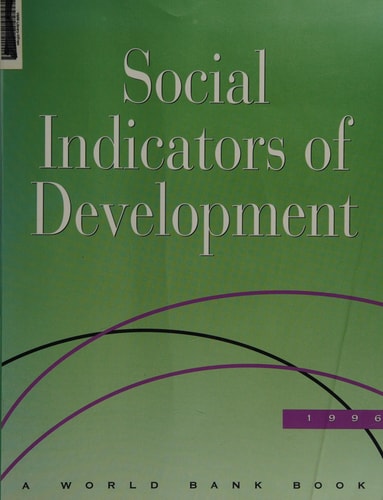
Social Indicators of Development 1996
0
0
As an Amazon Associate and affiliate partner, Menrva Books earns from qualifying purchases. Learn more
Author Description
Providing the social indicators for more than 190 economies, this text includes, estimates of fertility, mortality, illiteracy, access to healthcare, and shares of GDP for selected social expenditures. The indicators describe the characteristics of poverty and the efffectiveness of efforts to reduce poverty. International comparisons are made easier by a summary table that takes a cross-country look at a selected array of indicators. The data are gathered from governments, specialized international agencies and World Bank files.
Menrva's Summary
THE THESIS
The book presents a comprehensive dataset of social indicators for over 190 economies in 1996. It details estimates for fertility, mortality, illiteracy, healthcare access, and social expenditure as a share of GDP, aiming to characterize poverty and evaluate poverty reduction efforts. The data is compiled from governmental sources, international agencies, and World Bank files, facilitating international comparisons through a summary table of selected indicators.
THE SCOPE MAP
- Social indicators for over 190 economies
- Estimates of fertility and mortality rates
- Data on illiteracy levels
- Information on access to healthcare
- Shares of GDP for selected social expenditures
- Indicators describing characteristics of poverty
- Data on the effectiveness of poverty reduction efforts
- Summary table for cross-country comparisons
THE AUTHORITY PERSPECTIVE
This publication serves as a vital statistical resource for understanding global development trends in 1996. The collection and presentation of social indicators from diverse sources, including governments and international agencies, underscore its role as a foundational reference for researchers and policymakers. Its focus on poverty characteristics and the effectiveness of reduction strategies positions it as a key document for comparative analysis. The inclusion of a cross-country summary table further enhances its utility for international economic and social studies.
Page Count:
397
Publication Date:
1996-01-01
Publisher:
Johns Hopkins University Press
ISBN-10:
0801852749
ISBN-13:
9780801852749
Non-Fiction
History
Economics
Poverty Reduction
Community Tags
Similar Books