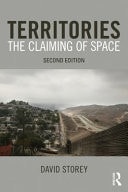
Territories
0
0
As an Amazon Associate and affiliate partner, Menrva Books earns from qualifying purchases. Learn more
Author Description
Politics And Political Relationships Underpin The World We Live In. From The Division Of The Earth's Surface Into Separate States To The Placement Of 'keep Out' Signs, Territorial Strategies To Control Geographic Space Can Be Used To Assert, Maintain Or Resist Power And As A Force For Oppression Or Liberation. Forms Of Exclusion Can Be Consolidated And Reinforced Through Territorial Practices, Yet They Can Also Be Resisted Through Similar Means. Territoriality Can Be Seen As The Spatial Expression Of Power, With Borders Dividing Those Inside From Those Outside. The Extensively Revised And Updated Second Edition Continues To Provide An Introduction To Theories Of Territoriality And The Outcomes Of Territorial Control And Resistance. It Explores The Construction Of Territories And The Conflicts Which Often Result Using A Range Of Examples Drawn From Various Spatial Scales And From Many Different Countries. It Ranges In Coverage From Conflicts Over National Territory (such As Israel/palestine, Northern Ireland, South Ossetia) To Divisions Of Space Based Around Class, Gender And Race. While Retaining The Key Elements Of The First Edition, This New Edition Covers Contemporary Debates On Nationalism, Territorialization, Globalization And Borders. It Updates The Factual Content To Explore The Territorial Consequences Of '9/11', The 'war On Terror' And The Conflicts In Iraq And Afghanistan. It Also Examines Migration, Refugees, The Territorial Expansion Of The European Union, And Territorial Divisions In The Home And Workplace.
Menrva's Summary
THE THESIS
This book investigates how territoriality functions as a spatial expression of power, examining how the control of geographic space is used to assert, maintain, or resist authority. David J. Storey, a scholar in human geography, utilizes a multidisciplinary framework to analyze the intersection of political power and physical space. By synthesizing theories of nationalism, state sovereignty, and social exclusion, the author argues that territorial practices are fundamental to both oppressive regimes and movements for liberation.
THE SCOPE MAP
What You Will Find
- Theoretical analysis of territoriality, nationalism, and the evolution of the sovereign state.
- Case studies ranging from geopolitical conflicts in Israel/Palestine and Northern Ireland to localized divisions based on class, gender, and race.
- Examination of contemporary global issues including the European Union expansion, migration, and the territorial consequences of the war on terror.
- A structured exploration of how space is partitioned in diverse environments, from national borders to the workplace and the home.
THE AUTHORITY PERSPECTIVE
Experts recognize this text as a foundational introduction to the study of political geography and the social construction of space. Readers frequently note the clarity of the prose, which makes complex geopolitical theories accessible to students and researchers alike.
Page Count:
256
Publication Date:
2012-01-01
Publisher:
Taylor & Francis Group
ISBN-10:
0415575494
ISBN-13:
9780203854570
Geography
Nation-state
Sociology
Territory national
International relations
Human Geography
Nationalism
Staatsgebiet
Community Tags
Similar Books