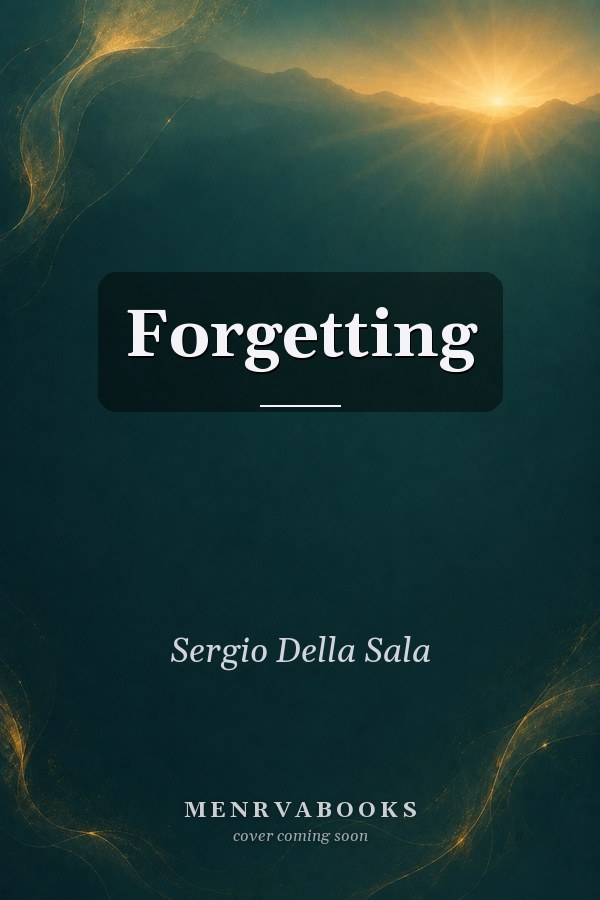
Forgetting
0
0
As an Amazon Associate and affiliate partner, Menrva Books earns from qualifying purchases. Learn more
Author Description
Memory And Forgetting Are Inextricably Intertwined. In Order To Understand How Memory Works We Need To Understand How And Why We Forget. The Topic Of Forgetting Is Therefore Hugely Important, Despite The Fact That It Has Often Been Neglected In Comparison With Other Features Of Memory. This Volume Addresses Various Aspects Of Forgetting, Drawing From Several Disciplines, Including Experimental And Cognitive Psychology, Cognitive And Clinical Neuropsychology, Behavioural Neuroscience, Neuroimaging, Clinical Neurology, And Computational Modeling. The First Chapters Of The Book Discuss The History Of Forgetting, Its Theories And Accounts, The Difference Between Short-term And Long-term Forgetting As Well As The Relevance Of Forgetting Within Each Of The Numerous Components Of Memory Taxonomy. The Central Part Summarizes And Discusses What We Have Learned About Forgetting From Animal Work, From Computational Modeling, And From Neuroimaging. Further Chapters Discuss Pathological Forgetting In Patients With Amnesia And Epilepsy, As Well As Psychogenic Forgetting. The Book Concludes By Focusing On The Difference Between Forgetting Of Autobiographical Memories Versus Collective Memory Forgetting. This Book Is The First To Address The Issue Of Forgetting From An Interdisciplinary Point Of View, But With A Particular Emphasis On Psychology. The Book Is Scientific And Yet Accessible In Tone, And As Such Is Suitable For Advanced Undergraduate And Postgraduate Students Of Psychology And Related Subjects, Such As Science And Neuroscience.
Menrva's Summary
THE THESIS
This volume investigates the fundamental mechanisms of forgetting, arguing that understanding memory requires a comprehensive analysis of why and how information is lost. Edited by Sergio Della Sala, the text synthesizes research from experimental psychology, clinical neuropsychology, and neuroscience to provide a unified framework for studying memory decay. By examining both healthy cognitive processes and pathological conditions, the book establishes a multidisciplinary approach to a subject often overshadowed by memory retention studies.
THE SCOPE MAP
What You Will Find
- Historical overview of theories regarding memory loss and cognitive decay.
- Comparative analysis of short-term versus long-term forgetting mechanisms.
- Integration of data from animal models, computational simulations, and neuroimaging studies.
- Clinical examination of pathological forgetting in patients with amnesia, epilepsy, and psychogenic conditions.
THE AUTHORITY PERSPECTIVE
Experts recognize this volume as a foundational interdisciplinary resource that bridges the gap between clinical neurology and cognitive psychology. Readers frequently note that while the prose remains accessible, the text provides the academic rigor necessary for advanced undergraduate and postgraduate study in the neurosciences.
Page Count:
352
Publication Date:
2010-01-01
Publisher:
Taylor & Francis Group
ISBN-10:
0203851641
ISBN-13:
9780203851647
Self-help
Psychology
Non-Fiction
Memory
Academic
Neuroscience
Community Tags
Other Editions(3)


Similar Books




![Instructor's resource manual to accompany Biology, 3nd edition [by] Karen Arms, Pamela S. Camp](https://storage.googleapis.com/menrva_img_storage/covers/generated/9780030036477.jpg)