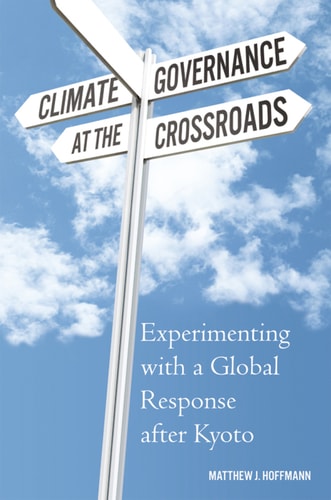
Climate Governance at the Crossroads: Experimenting with a Global Response after Kyoto
0
0
As an Amazon Associate and affiliate partner, Menrva Books earns from qualifying purchases. Learn more
Author Description
The global response to climate change has reached a critical juncture. Since the 1992 signing of the United Nations Framework Convention on Climate Change, the nations of the world have attempted to address climate change through large-scale multilateral treaty-making. These efforts have been heroic, but disappointing. As evidence for the quickening pace of climate change mounts, the treaty-making process has sputtered, and many are now skeptical about the prospect of an effective global response. Yet global treaty-making is not the only way that climate change can be addressed or, indeed, is being addressed. In the last decade myriad initiatives have emerged across the globe independently from, or only loosely connected to, the "official" UN-sponsored negotiations and treaties. In the face of stalemate in the formal negotiations, the world is experimenting with alternate means of responding to climate change. Climate Governance at the Crossroads chronicles these innovations--how cities, provinces and states, citizen groups, and corporations around the globe are addressing the causes and symptoms of global warming. The center of gravity in the global response to climate change is shifting from the multilateral treaty-making process to the diverse activities found beyond the negotiating halls. These innovations are pushing the envelope of climate action and demonstrating what is possible, and they provide hope that the world will respond effectively to the climate crisis. In introducing climate governance "experiments" and examining the development and functioning of this new world of climate policy-making, this book provides an exciting new perspective on the politics of climate change and the means to understand and influence how the global response to climate change will unfold in the coming years.
Menrva's Summary
THE THESIS
This book investigates whether the shift from centralized multilateral treaty-making to decentralized, experimental climate governance offers a viable path for addressing the global climate crisis. Matthew J. Hoffmann, a scholar of international relations and environmental politics, utilizes a framework of 'governance experiments' to analyze the proliferation of sub-national and non-state climate initiatives. He argues that while formal UN-sponsored negotiations have reached a stalemate, a diverse array of actors—including cities, corporations, and NGOs—are creating a new, bottom-up architecture for climate policy that may prove more effective than traditional top-down approaches.
THE SCOPE MAP
What You Will Find
- Analysis of the transition from the Kyoto Protocol era to decentralized climate action.
- A theoretical framework for defining and evaluating 'governance experiments.'
- Case studies of climate initiatives led by cities, states, and private corporations.
- Examination of the interaction between formal international treaties and informal local actions.
Scope Limits
- The text does not provide a comprehensive technical manual for implementing specific carbon-reduction technologies.
- It does not focus on the physical science of climate change, but rather the political and institutional mechanisms of response.
THE AUTHORITY PERSPECTIVE
Experts in international relations frequently cite this work as a foundational text for understanding the shift toward polycentric climate governance. Readers often note the academic density of the prose, which is well-suited for students and policy researchers interested in institutional theory.
Page Count:
240
Publication Date:
2011-01-01
Publisher:
Oxford University Press
ISBN-10:
0190452897
ISBN-13:
9780190452896
Governance
Climatic changes
Climate Change
International relations
Public Policy
Sustainability
Community Tags
Similar Books