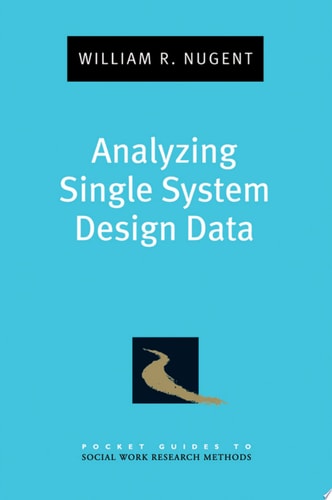
Analyzing Single System Design Data: Pocket Guide to Social Work Research Methods
0
0
As an Amazon Associate and affiliate partner, Menrva Books earns from qualifying purchases. Learn more
Author Description
Single system, or single case, design studies are a convenient method for evaluating practice, allowing professionals to track clients' response to treatment and change over time. They also allow researchers to gather data where it might be difficult to conduct a study involving treatment and control groups; in a school setting, or a community mental health agency, for example, random assignment may be impossible, whereas individual student or client progress across time can be more easily monitored. This pocket guide reviews a wide range of techniques for analyzing single system design data, including visual analysis methods, graphical methods, and statistical methods. From basic visual observation to complex ARIMA statistical models for use with interrupted time series designs, numerous data analysis methods are described and illustrated in this unique and handy book. The author frankly describes limitations and strengths of the data analysis methods so that readers can select an appropriate method and use the results responsibly in order to improve practice and client well-being. This accessible yet in-depth introduction will serve as a highly practical resource for doctoral students and researchers alike.
Menrva's Summary
THE THESIS
This guide investigates the methodologies for analyzing data derived from single system design studies to evaluate clinical practice and client progress. William R. Nugent, an expert in social work research, provides a structured overview of analytical techniques ranging from basic visual observation to advanced statistical modeling. The text argues that by understanding the strengths and limitations of various data analysis methods, practitioners can make informed decisions to improve client outcomes in settings where traditional control group studies are impractical.
THE SCOPE MAP
What You Will Find
- Visual analysis and graphical methods for tracking client progress over time
- Statistical methods including ARIMA models for interrupted time series designs
- Comparative analysis of method strengths and limitations for clinical application
Scope Limits
- Does not cover broad experimental design or randomized controlled trial methodologies
- Focuses specifically on single system or single case data rather than large-scale population studies
THE AUTHORITY PERSPECTIVE
Experts identify this text as a practical, accessible resource for students and researchers navigating the complexities of clinical data evaluation. Readers frequently note the balance between technical rigor and the clear, application-focused presentation of statistical tools.
Page Count:
179
Publication Date:
2009-01-01
Publisher:
Oxford University Press
ISBN-10:
0190451475
ISBN-13:
9780190451479
Politics
Applied
Methodology
Data Analysis
Introduction to Social WorkWelfare
Kindle Store
Statistics
Research Methods
Categories
Statistical methods
Social Work
Kindle eBooks
Community Tags
Similar Books