Author Description
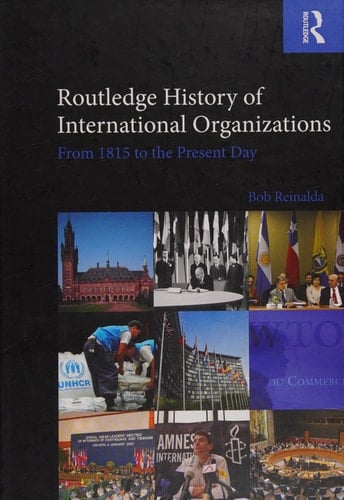
This Is A Comprehensive History Of International Organizations From Their Very Beginning At The Congress Of Vienna In 1815 Up To The Present Day, And Provides The Readers With Nearly Two Centuries Of World History Seen From The Perspective Of International Organizations.--cover, P. 4. Emergence And Evolution Of International Organizations -- 1815: The British Postwar Institutional Strategy And The Concert Of Europe -- The Central Commission For The Navigation Of The Rhine And Burgeoning Free Trade -- Citizens Organizing Transnationally In Support Of Slavery Abolition And Peace -- The International Red Cross Made Responsible For The Geneva Convention On Wounded Soldiers (1864) -- Arbitration And International Law As Normative Powers In International Relations / The 1899 And 1907 Peace Conferences In The Hague And The Hague System -- Creation Of The International Telegraph Union (1865) And The Universal Postal Union (1874) -- Standardization And Intellectual Property Regulated Internationally -- Regulation Of International Shipping, Railway And Road Traffic -- Public International Unions And The Creation Of Continental Markets In Europe And The Americas (1860-1910) -- International Business Around The End Of The Nineteenth Century --^ Rising International Emancipation Movements Of Workers And Women -- International Labour Conventions (1906) And The Foundation For The Welfare State -- The First World War And The Creation Of The League Of Nations (1919) -- The Major Powers And Collective Security In The Interwar Period -- The Normative Workings Of The International Labour Organization (1919) -- The League Of Nations' Ongoing Economic And Social Activities -- Multilateral Cooperation During The Second World War -- The United Nations: An Improved Security Organization With Economic Coordination -- The Workings Of The United Nations System -- Refugees, Peacekeeping And Cold War At The United Nations -- Regional Alliances In The 1940s And 1950s -- Peaceful Coexistence And N
Menrva's Summary
THE THESIS
This book investigates the historical development and functional evolution of international organizations from the Congress of Vienna in 1815 to the contemporary era. Bob Reinalda, a scholar of international relations, utilizes a comprehensive historical framework to analyze how these institutions have shaped global governance. By tracing the transition from early diplomatic congresses to modern multilateral systems, the author argues that international organizations serve as critical normative powers that define the parameters of global cooperation and state interaction.
THE SCOPE MAP
What You Will Find
- A chronological analysis of institutional development starting from the 1815 Concert of Europe.
- Examination of specialized agencies including the Universal Postal Union and the International Labour Organization.
- Case studies on the transition from the League of Nations to the United Nations system.
- Analysis of the role of non-state actors, including transnational movements for labor rights and women's emancipation.
THE AUTHORITY PERSPECTIVE
Experts recognize this work as a foundational reference for understanding the structural history of global governance. Readers frequently note the academic density of the prose, which provides a rigorous and detailed account of institutional growth over two centuries.
Page Count:
850
Publication Date:
2009-01-01
Publisher:
Routledge
ISBN-10:
0203876571
ISBN-13:
9780203876572
History
Non-Fiction
International relations
Diplomacy
Community Tags
Similar Books