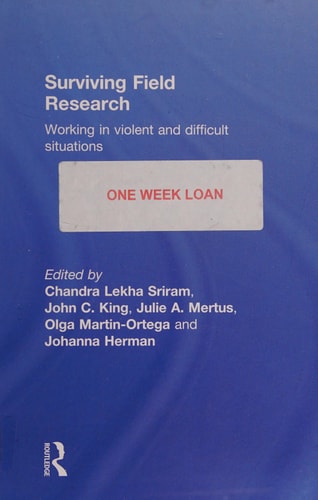
Surviving Field Research: Working in Violent and Difficult Situations
0
0
As an Amazon Associate and affiliate partner, Menrva Books earns from qualifying purchases. Learn more
Author Description
In recent decades there has been increasing attention to mass atrocities such as genocide, war crimes, crimes against humanity, and other gross human rights violations. At the same time, there has been a vast increase in the number of academics and researchers seeking to analyze the causes of, and offer practical responses to, these atrocities. Yet there remains insufficient discussion of the practical and ethical challenges surrounding research into serious abuses and dealing with vulnerable populations. The aim of this edited volume is to guide researchers in identifying and addressing challenges in conducting qualitative research in difficult circumstances, such as conducting research in autocratic or uncooperative regimes, with governmental or non-governmental officials, and perhaps most importantly, with reluctant respondents such as victims of genocide or (on the other side of the coin) war criminals. The volume proceeds in five substantive sections, each addressing a different challenge of conducting field research in conflict-affected or repressive situations: Ethics Access Veracity Security Identity, objectivity, behaviour. This important text will be vital reading for students, scholars and researchers in the areas of research methods, international relations, anthropology and human rights. It will also be of keen interest to policy practioners and NGOs, and especially relevant for those working in the regions of Africa, Latin America, and Asia.
Menrva's Summary
THE THESIS
This volume investigates the practical and ethical complexities inherent in conducting qualitative field research within conflict-affected, repressive, or high-risk environments. Edited by Chandra Lekha Sriram, the text compiles contributions from various scholars to address the methodological gaps in studying mass atrocities and human rights violations. It provides a structured framework for navigating the logistical, security, and moral dilemmas faced by researchers when engaging with vulnerable populations or uncooperative regimes.
THE SCOPE MAP
What You Will Find
- Methodological strategies for conducting qualitative research in autocratic or uncooperative political regimes.
- Ethical guidelines for interacting with sensitive respondent groups, including victims of genocide and perpetrators of war crimes.
- Analysis of the five core research pillars: Ethics, Access, Veracity, Security, and Identity.
- Practical advice on maintaining objectivity and managing researcher behavior in volatile field settings.
THE AUTHORITY PERSPECTIVE
Experts identify this volume as a foundational resource for students and practitioners working in international relations and human rights. Readers frequently note the practical utility of the text in preparing for the unpredictable nature of field research in conflict zones.
Page Count:
280
Publication Date:
2009-01-01
Publisher:
Routledge
ISBN-10:
0203875273
ISBN-13:
9780203875278
Anthropology
Sociology
International relations
Research Methods
Violence
Human rights
Community Tags
Similar Books