Sonidos Negros: On the Blackness of Flamenco
0
0
As an Amazon Associate and affiliate partner, Menrva Books earns from qualifying purchases. Learn more
Author Description
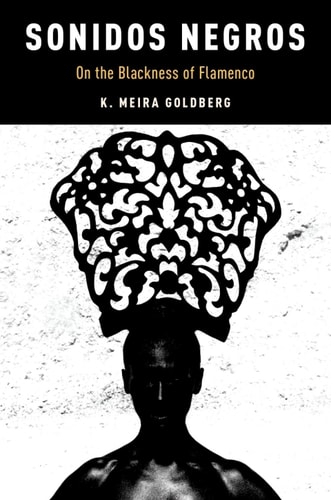
How is the politics of Blackness figured in the flamenco dancing body? What does flamenco dance tell us about the construction of race in the Atlantic world? Sonidos Negros traces how, in the span between 1492 and 1933, the vanquished Moor became Black, and how this figure, enacted in terms of a minstrelized Gitano, paradoxically came to represent Spain itself. The imagined Gypsy about which flamenco imagery turns dances on a knife's edge delineating Christian and non-Christian, White and Black worlds. This figure's subversive teetering undermines Spain's symbolic linkage of religion with race, a prime weapon of conquest. Flamenco's Sonidos Negros live in this precarious balance, amid the purposeful confusion and ruckus cloaking embodied resistance, the lament for what has been lost, and the values and aspirations of those rendered imperceptible by enslavement and colonization.
Menrva's Summary
THE THESIS
How is the politics of Blackness figured in the flamenco dancing body, and what does this reveal about the construction of race in the Atlantic world? K. Meira Goldberg, a scholar of flamenco history and performance, utilizes a multidisciplinary framework to examine the evolution of the 'Moor' into the 'Black' figure within Spanish cultural identity. By analyzing the intersection of performance, religion, and colonial history, the author argues that the flamenco dancer serves as a site of resistance against the racialized hierarchies established by the Spanish state.
THE SCOPE MAP
What You Will Find
- Historical analysis of the period between 1492 and 1933
- Examination of the 'minstrelized Gitano' as a symbolic figure in Spanish identity
- Investigation into the intersection of Christian and non-Christian racial constructs
- Theoretical framework linking embodied performance to colonial resistance
Scope Limits
- Does not provide a comprehensive technical manual for flamenco dance steps
- Focuses primarily on the symbolic and political history rather than contemporary performance trends
THE AUTHORITY PERSPECTIVE
Experts in Iberian music and cultural studies recognize this work as a significant contribution to the understanding of racial politics in Spanish performance art. Readers frequently note the academic density of the prose and the rigorous historical research that underpins the author's arguments.
Page Count:
315
Publication Date:
2018-01-01
Publisher:
Oxford University Press
ISBN-10:
0190466944
ISBN-13:
9780190466947
History
Music
Humanities
Flamenco
Dance
Race & Ethnicity
Community Tags
Similar Books