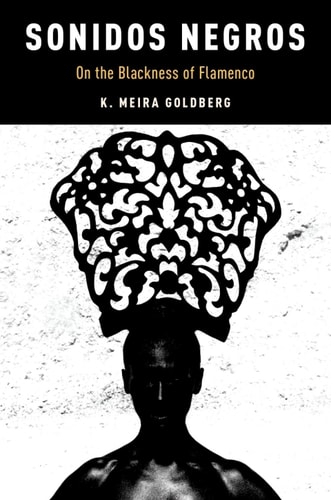
Sonidos Negros: On the Blackness of Flamenco
0
0
As an Amazon Associate and affiliate partner, Menrva Books earns from qualifying purchases. Learn more
Author Description
How Is The Politics Of Blackness Figured In The Flamenco Dancing Body? What Does Flamenco Dance Tell Us About The Construction Of Race In The Atlantic World? 'Sonidos Negros' Traces How, Between 1492-when Christian Reconquest Of The Iberian Peninsula Coincided With Christopher Columbus's Landing On Hispaniola - And 1933 - When Andalusian Poet Federico García Lorca Published His 'Theory And Play Of The Duende' - The Vanquished Moor Became Black; And How The Imagined Gitano (gypsy, Or Roma) Embodies The Warring Images And Sounds Of This Process. K. Meira Goldberg. Includes Bibliographical References And Index.
Menrva's Summary
THE THESIS
This work investigates how the politics of Blackness is constructed and performed within the flamenco dancing body, specifically examining the intersection of race and performance in the Atlantic world. K. Meira Goldberg utilizes historical analysis and performance theory to argue that the figure of the Gitano in flamenco serves as a site where complex, warring images of race, conquest, and identity are negotiated. By situating flamenco within the broader context of the Iberian Peninsula's history, the author demonstrates how performance practices reflect and reinforce shifting racial hierarchies.
THE SCOPE MAP
What You Will Find
- Historical analysis of the period between 1492 and 1933.
- Examination of the transformation of the Moorish identity into Blackness.
- Analysis of Federico García Lorca’s 'Theory and Play of the Duende' as a cultural artifact.
- Exploration of the Gitano as an embodiment of historical racial tensions.
Scope Limits
- The text does not provide a comprehensive history of flamenco technique or choreography.
- The analysis focuses primarily on the cultural and racial construction of the performer rather than the evolution of musical theory.
THE AUTHORITY PERSPECTIVE
Scholars and critics recognize this text as a significant contribution to the intersection of dance studies and critical race theory. Readers frequently note the academic density of the prose, which requires a foundational understanding of both Iberian history and performance theory to fully engage with the author's arguments.
Page Count:
0
Publication Date:
1900-01-01
Publisher:
Oxford University Press,
ISBN-10:
0190466952
ISBN-13:
9780190466954
History
Music
Race Studies
Dance
Flamenco
Dance and race
Community Tags
Similar Books