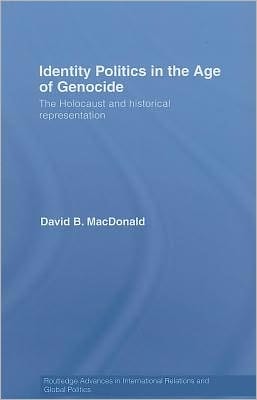
Identity Politics in the Age of Genocide: The Holocaust and Historical Representation
0
0
As an Amazon Associate and affiliate partner, Menrva Books earns from qualifying purchases. Learn more
Author Description
Examines The Impact The Holocaust Has On Ethnic And Social Groups, Asking Whether The Holocaust Is A Useful Or Destructive Means Of Reading Non-jewish History, Explains The Rise Of The Holocaust As A Process, Charting How Its Importance As A Symbol Has Evolved. Introduction: The Holocaust And Identity Politics -- Cosmopolitanizing The Holocaust: From The Eichmann Trial To Identity Politics -- Considering Holocaust Uniqueness: From Hebrew Peoplehood To The Americanization Of Memory -- Colonialism, Genocide, And Indigenous Rights: America, Australia, And New Zealand -- Uncle Sam's Willing Executioners?: Indigenous Genocide And Representation In The United States -- Australia: Aboriginal Genocide And The Holocaust -- Indigenous History Through The Prism Of The Holocaust: New Zealand Maori -- The Armenian Genocide: The Politics Of Recognition And Denial -- The Armenian Genocide And Contemporary Holocaust Scholarship -- Nanking, The Chinese Holocaust, And Japanese Atomic Victim Exceptionalism -- Serbs, Croats, And The Dismemberment Of Yugoslavia: War And Genocide In The Twentieth Century -- Serbophobia And Victimhood: Serbia And The Successor Wars In Yugoslavia -- Conclusions. David B. Macdonald. Includes Bibliographical References (p. [206]-257) And Index.
Menrva's Summary
THE THESIS
This book investigates whether the Holocaust serves as a constructive or destructive framework for interpreting non-Jewish historical events and identity politics. David B. MacDonald, a scholar of international relations and genocide studies, examines how the Holocaust has transitioned from a specific historical event into a global symbol used to define victimhood and ethnic identity. He argues that the universalization of Holocaust memory often obscures the unique historical contexts of other genocides and indigenous struggles.
THE SCOPE MAP
What You Will Find
- Analysis of the evolution of Holocaust memory from the Eichmann trial to contemporary identity politics.
- Comparative studies of genocide representation in the United States, Australia, and New Zealand.
- Examination of the Armenian Genocide and the politics of international recognition.
- Case studies on the Nanking Massacre and the Yugoslav Wars to illustrate the application of Holocaust-centric victimhood.
THE AUTHORITY PERSPECTIVE
Experts recognize this work as a critical contribution to memory studies and the political sociology of genocide. Readers frequently note the academic density of the prose and the author's rigorous approach to comparing disparate historical traumas.
Page Count:
261
Publication Date:
2008-01-01
Publisher:
Routledge
ISBN-10:
0203934644
ISBN-13:
9780203934647
History
Genocide
Holocaust
Sociology
Identity politics