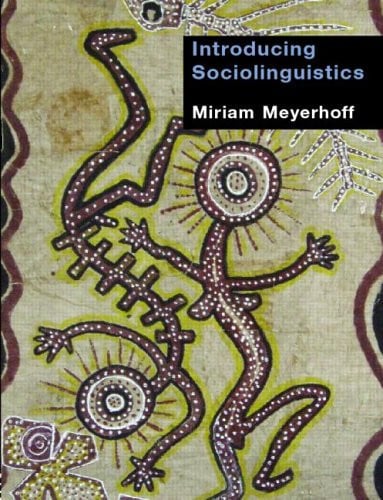
Introducing Sociolinguistics
0
0
As an Amazon Associate and affiliate partner, Menrva Books earns from qualifying purchases. Learn more
Author Description
This key text provides a solid, up-to-date appreciation of the interdisciplinary nature of the field. It covers foundation issues, recent advances and current debates – presenting familiar or classic data in new ways, and supplementing the familiar with fresh examples from a wide range of languages and social settings. It clearly explains the patterns and systems that underlie language variation in use, as well as the ways in which alternations between different language varieties index personal style, social power and national identity. Individual chapters cover: social dialects and individual style; language attitudes; politeness; multilingualism and language choice; real time and apparent time; change in language; social class, social networks and communities of practice; gender; language and dialect contact. Each chapter includes exercises that enable readers to engage critically with the text, break out boxes making connections between sociolinguistics and linguistic or social theory, and brief, lively add-ons guaranteed to make the book a memorable and enjoyable read. With a full glossary of terms and suggestions for further reading, this text gives students all the tools they need for an excellent command of sociolinguistics.
Menrva's Summary
THE THESIS
This text investigates the complex relationship between language use and social structure, seeking to explain how linguistic variation reflects and constructs identity, power, and community. Miriam Meyerhoff, a prominent researcher in the field, utilizes a global array of case studies and contemporary data to provide a comprehensive framework for understanding sociolinguistic patterns. The book synthesizes foundational theories with recent academic debates, offering a structured approach to analyzing how language functions within diverse social settings.
THE SCOPE MAP
What You Will Find
- Comprehensive coverage of core topics including social dialects, language attitudes, politeness, and multilingualism.
- Methodological tools for analyzing language change in real time and apparent time.
- Pedagogical features such as critical thinking exercises, theoretical connection boxes, and a detailed glossary.
- Analysis of the intersection between language variation and social variables like gender, class, and social networks.
THE AUTHORITY PERSPECTIVE
Experts in the field recognize this work as a foundational and highly accessible introduction for students and researchers alike. Readers frequently highlight the balance between academic rigor and the engaging, global scope of the examples provided throughout the text.
Page Count:
352
Publication Date:
2006-01-01
Publisher:
Routledge
ISBN-10:
0203966708
ISBN-13:
9780203966709
Sociology
textbook
Education
Linguistics
Reference
Community Tags
Other Editions(10)





Similar Books















Reader Comments
Share Your Thoughts
No comments yet. Be the first to share your thoughts!