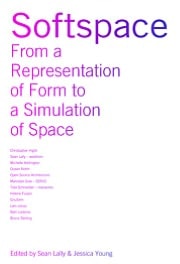
Softspace: From A Representation Of Form To A Simulation Of Space
0
0
As an Amazon Associate and affiliate partner, Menrva Books earns from qualifying purchases. Learn more
Author Description
Softspace Explores How Once Elusive Conditionings Of Space Are Now Opening Entirely New Possibilities For Our Understanding, Creation And Experience Of Architecture. In The Past, Advancements In The Visualization And Simulation Of Energies And Material Qualities - Such As Air, Gas, Fire, Sound, Scent And Electricity - Have Been Used Simply To Refine Preconceived Spatial, Organizational And Formal Conditions. More Recently, The Appropriation Of Digital Tools Into Architectural Design Has Been Focused On Innovative Form, Structure And Geometries While Neglecting The Vast Range Of Materials And Energies Previously Dismissed As Simply Atmospheric, Qualitative Or Residual To The Design Process. Today, Through The Development And Dissemination Of Technologies, These Energies And Intensities Can Become Architectural Materials Visualized And Operated Upon As Systematically And Accurately As The Forces That Guide Structure And Geometry. Softspace Explores The Spatial And Organizational Potential Of These Advancements, And Their Relation To Historical And Ideological Trajectories. Through Contributions By Emerging Architectural Practices And Essayists, Softspace Takes Stock Of Current Advancements In Design And Research And Examines The Potentials Of Such Energy Matters To Act As Catalysts For Design Innovation Today.--jacket.
Menrva's Summary
THE THESIS
This book investigates how emerging digital technologies and the simulation of atmospheric energies can transform these previously intangible elements into primary architectural materials. Authors Sean Lally and Jessica Young curate a collection of essays and practice-based research that challenges the traditional architectural focus on static form and geometry. By analyzing the intersection of energy, matter, and spatial organization, the text argues for a shift in design methodology that treats invisible forces like sound, heat, and electricity as structural components.
THE SCOPE MAP
What You Will Find
- Analysis of historical and ideological trajectories in architectural design.
- Theoretical frameworks for integrating atmospheric energies into spatial planning.
- Case studies and contributions from contemporary architectural practices.
- Methodologies for visualizing and operating upon non-visual phenomena as systematic design inputs.
THE AUTHORITY PERSPECTIVE
Experts and practitioners in the field of architectural theory identify this as a significant text for understanding the shift toward energy-based design. Readers frequently note the academic density of the prose, which serves as a foundational resource for those interested in the intersection of digital simulation and environmental architecture.
Page Count:
224
Publication Date:
2007-01-01
Publisher:
Routledge
ISBN-10:
0203967135
ISBN-13:
9780203967133
Architecture
Design
Architecture and technology
Architecture
Technology
Community Tags
Similar Books