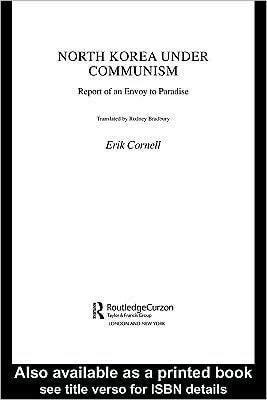
North Korea under Communism: Report of an Envoy to Paradise
0
0
As an Amazon Associate and affiliate partner, Menrva Books earns from qualifying purchases. Learn more
Author Description
After the collapse of the Soviet world, North Korea alone has continued on the rigid communist way, in spite of its economic consequences leading the state beyond ruin to famine. What are the reasons behind this peculiar choice of direction? Why did the leaders in Pyongyang pursue a policy abandoned not only by the Soviet Union, but also by China and Vietnam? The author of this book spent three years as head of the embassy of Sweden in Pyongyang. Until a few years ago, it was the only Western embassy in North Korea. His unique experiences are related with descriptions of day-to-day life and with analyses of economic, political and ideological conditions. A picture is drawn of a society and a political order that defy both human nature and common sense.
Menrva's Summary
THE THESIS
This book investigates the underlying political, economic, and ideological factors that compelled North Korea to maintain a rigid communist structure long after its global collapse. Cornell Erik, having served as the head of the Swedish embassy in Pyongyang, utilizes his unique diplomatic vantage point to analyze the state's isolationist trajectory. He contrasts the North Korean experience with the reformist paths taken by the Soviet Union, China, and Vietnam, arguing that the regime's persistence defies both human nature and rational economic governance.
THE SCOPE MAP
What You Will Find
- First-hand observations of daily life within the isolated North Korean state.
- Diplomatic analysis of the regime's political and ideological framework.
- Comparative study of North Korean economic policy versus other communist nations.
- Detailed accounts of the structural collapse and subsequent famine conditions.
THE AUTHORITY PERSPECTIVE
Reader & Expert Consensus: Experts recognize this work as a significant primary source due to the author's rare access as a Western diplomat in Pyongyang. Readers frequently note the clinical, observational nature of the prose, which provides a grounded perspective on a notoriously opaque political system.
Page Count:
0
Publication Date:
2005-01-01
Publisher:
Taylor & Francis Group
ISBN-10:
0203995082
ISBN-13:
9780203995082
Non-Fiction
History
Biography
Korea North
International relations
Community Tags
Similar Books