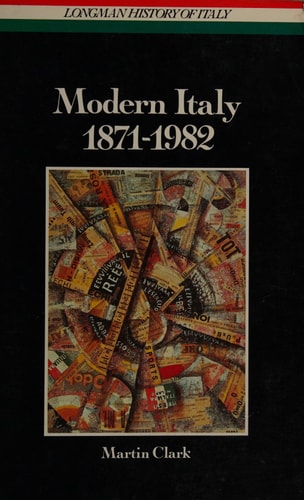
Modern Italy, 1871-1982
0
0
As an Amazon Associate and affiliate partner, Menrva Books earns from qualifying purchases. Learn more
Author Description
After examining the early attempts at nation-making, Dr. Clark helps us to understand why, given the diversity and apparent backwardness of Italy before 1914, its Liberal regime in the 1920s was unable to withstand the rise of Fascism.
Menrva's Summary
THE THESIS
This book investigates the complex historical trajectory of modern Italy from its unification in 1871 through to 1982, focusing on the factors that shaped its political, social, and economic development. Martin Clark, a noted historian, draws upon extensive archival research and secondary sources to analyze the persistent challenges faced by the Italian state, including regional disparities, the legacy of unification, and the rise of authoritarianism. The book critically examines the strengths and weaknesses of liberal Italy, the rise and fall of Fascism, and the subsequent reconstruction and evolution of the Italian Republic.
THE SCOPE MAP
- An examination of the early attempts at Italian nation-making and the challenges of unification.
- Analysis of the Liberal regime's inability to withstand the rise of Fascism in the 1920s, given pre-1914 diversity and backwardness.
- Exploration of the Fascist era, its policies, and its impact on Italian society.
- An overview of post-World War II Italy, including the establishment and development of the Italian Republic.
- Discussion of key social, economic, and political trends throughout the period 1871-1982.
THE AUTHORITY PERSPECTIVE
The book is recognized for its comprehensive scope, covering over a century of Italian history with detailed analysis. Scholars and students of European history appreciate its nuanced examination of the factors contributing to both the strengths and vulnerabilities of the Italian state. The work is particularly noted for its insightful explanation of how pre-existing conditions in liberal Italy facilitated the rise of Fascism. Its thoroughness makes it a valuable resource for understanding the long-term historical forces that have shaped contemporary Italy.
Page Count:
444
Publication Date:
1984-01-01
Publisher:
Longman
ISBN-10:
058248362X
ISBN-13:
9780582483620
Non-Fiction
History
European History
Modern History
Community Tags
Similar Books