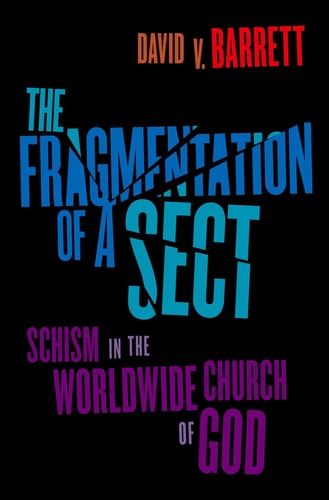
The Fragmentation of a Sect: Schism in the Worldwide Church of God
0
0
As an Amazon Associate and affiliate partner, Menrva Books earns from qualifying purchases. Learn more
Author Description
In the mid-1930s Herbert W. Armstrong, an unsuccessful American advertising executive, founded a millennialist Sabbatarian Christian sect with a heterodox theology. Over the next half century, despite a number of setbacks, scandals, criticisms, and attacks from former members and anti-cultists, Armstrong's organization, the Worldwide Church of God, grew to around 100,000 baptized members with a world circulation of over six million for its flagship monthly magazine Plain Truth. In January 1986, Armstrong died. His successor changed most of the church's distinctive doctrines, leading it towards an increasing convergence with mainstream Evangelical Christianity. This created a massive cognitive dissonance in ministers and members: should they accept or reject the authority of the church leadership which had abandoned the authority of the founder's teachings? Groups of ministers left the religion to form new churches, taking tens of thousands of members with them. These schismatic churches in turn faced continuing schism, resulting in over 400 offshoot churches within little more than a decade.In this major study David V. Barrett tells the story of the Worldwide Church of God. He examines the processes involved in schism and the varying forms of legitimation of authority within both the original church and its range of offshoots, from hardline to comparatively liberal. His book extends the concepts of rational choice theory when applied to complex religious choices. He also offers a new typological model for categorizing how movements can change after their founder's death, and explores the usefulness of this model by applying it not only to the Worldwide Church of God but also to a wide variety of other religions.
Menrva's Summary
THE THESIS
This study investigates the mechanisms of institutional schism and the legitimation of authority following the death of a charismatic religious founder. David V. Barrett, a researcher specializing in new religious movements, utilizes the history of the Worldwide Church of God to analyze how organizations navigate theological shifts and leadership transitions. By examining the collapse of the original church structure and the subsequent emergence of over 400 offshoot groups, the author develops a new typological model for understanding post-founder religious evolution.
THE SCOPE MAP
What You Will Find
- A detailed historical account of the Worldwide Church of God from its 1930s origins to its post-1986 transformation.
- An application of rational choice theory to explain the decision-making processes of members and ministers during organizational crises.
- A new typological framework for categorizing religious movements undergoing structural change.
Scope Limits
- The analysis focuses primarily on the internal dynamics of this specific sect and its direct offshoots rather than a broad survey of all global Christian denominations.
- The text does not provide a comprehensive biography of Herbert W. Armstrong beyond his role as the movement's founder.
THE AUTHORITY PERSPECTIVE
Scholars of religion recognize this work as a significant contribution to the study of sectarian fragmentation and the sociology of religious authority. Readers frequently note the academic rigor of the prose and the utility of the author's typological model for broader applications in religious studies.
Page Count:
310
Publication Date:
2016-07-15
Publisher:
Oxford University Press
ISBN-10:
0190492899
ISBN-13:
9780190492892
Religion
Cults and Sects
Christianity
Sociology of Religion
Theology
Church History
Community Tags
Similar Books