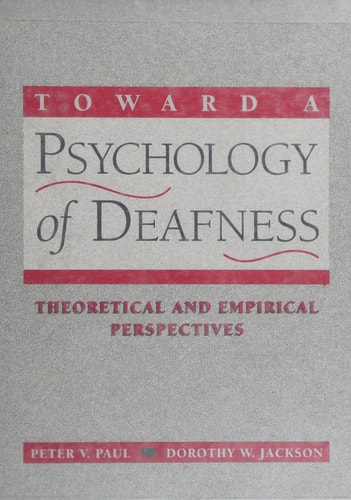
Toward a Psychology of Deafness: Theoretical and Empirical Perspectives
0
0
As an Amazon Associate and affiliate partner, Menrva Books earns from qualifying purchases. Learn more
Author Description
Providing an in-depth examination of the impact of deafness on cognitive and psychosocial development, this clearly written book synthesizes salient theory and research findings from an interdisciplinary perspective. The issues behind the clinical vs. cultural debate are explored in detail, including oralism, total communication, and the use of American Sign Language -- the three major communication philosophies currently influencing the education of deaf children. With the exception of a chapter on culture and identity, the major focus of the book is on individuals with severe to profound hearing impairment. Whether these individuals are linked to a world of vision or a world of audition is explored in some detail; the authors point out the pervasive implications of this issue for the development of cognition, language and literacy.
Menrva's Summary
THE THESIS
This work investigates the multifaceted impact of deafness on cognitive and psychosocial development by synthesizing interdisciplinary research and theoretical frameworks. Authors Dorothy W. Jackson and Peter V. Paul utilize their academic backgrounds to evaluate the clinical versus cultural paradigms that shape the lives of individuals with severe to profound hearing impairment. The text critically examines how communication philosophies, such as oralism and American Sign Language, influence literacy, identity, and the broader developmental trajectory of deaf children.
THE SCOPE MAP
What You Will Find
- Comparative analysis of communication philosophies including oralism, total communication, and American Sign Language.
- Examination of cognitive development in the context of visual versus auditory worldviews.
- Discussion of psychosocial development and the formation of identity within deaf communities.
- Synthesis of empirical research regarding literacy acquisition and language development.
THE AUTHORITY PERSPECTIVE
This text serves as a foundational academic resource for students and professionals in the fields of special education and psychology. Its structured approach to the clinical and cultural debates provides a comprehensive overview of the complexities inherent in the development of deaf individuals.
Page Count:
476
Publication Date:
1992-12-24
Publisher:
Allyn & Bacon
ISBN-10:
0205141129
ISBN-13:
9780205141128
Psychology
Sociology
Deafness
Deaf
Education
Deaf Studies
Community Tags
Similar Books