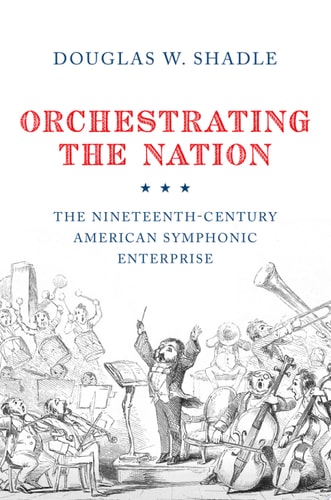
Orchestrating the Nation: The Nineteenth-Century American Symphonic Enterprise
0
0
As an Amazon Associate and affiliate partner, Menrva Books earns from qualifying purchases. Learn more
Author Description
During the nineteenth century, nearly one hundred symphonies were written by over fifty composers living in the United States. With few exceptions, this repertoire is virtually forgotten today. In Orchestrating the Nation: The Nineteenth-Century American Symphonic Enterprise, author Douglas W. Shadle explores the stunning stylistic diversity of this substantial repertoire and uncovers why it failed to enter the musical mainstream.Throughout the century, Americans longed for a distinct national musical identity. As the most prestigious of all instrumental genres, the symphony proved to be a potent vehicle in this project as composers found inspiration for their works in a dazzling array of subjects, including Niagara Falls, Hiawatha, and Western pioneers. With a wealth of musical sources at his disposal, including never-before-examined manuscripts, Shadle reveals how each component of the symphonic enterprise-from its composition, to its performance, to its immediate and continued reception by listeners and critics-contributed to competing visions of American identity.Employing an innovative transnational historical framework, Shadle's narrative covers three continents and shows how the music of major European figures such as Beethoven, Schumann, Wagner, Liszt, Brahms, and Dvorák exerted significant influence over dialogues about the future of American musical culture. Shadle demonstrates that the perceived authority of these figures allowed snobby conductors, capricious critics, and even orchestral musicians themselves to thwart the efforts of American symphonists despite widespread public support of their music. Consequently, these works never entered the performing canons of American orchestras.An engagingly written account of a largely unknown repertoire, Orchestrating the Nation shows how artistic and ideological debates from the nineteenth century continue to shape the culture of American orchestral music today.
Menrva's Summary
THE THESIS
This book investigates why a substantial body of nineteenth-century American symphonic music failed to secure a permanent place in the modern musical canon. Author Douglas W. Shadle, a musicologist specializing in American symphonic history, utilizes archival manuscripts and historical performance data to argue that the exclusion of these works resulted from complex ideological conflicts rather than a lack of quality. He posits that the interplay between European musical authority and domestic cultural aspirations created a gatekeeping environment that marginalized American composers.
THE SCOPE MAP
What You Will Find
- Analysis of nearly one hundred symphonies composed by over fifty American residents.
- Examination of the influence of European figures such as Beethoven, Wagner, and Dvorák on American musical discourse.
- Investigation into the roles of conductors, critics, and orchestral musicians in shaping performance history.
Scope Limits
- The study focuses primarily on the nineteenth-century symphonic enterprise and does not extend into twentieth-century orchestral developments.
- It does not provide a comprehensive biography of every composer mentioned, focusing instead on the systemic reception of their symphonic works.
THE AUTHORITY PERSPECTIVE
Scholars and music historians recognize this work as a significant contribution to the study of American musical identity and the institutional barriers within the classical music industry. Experts frequently highlight the depth of Shadle's archival research and his ability to synthesize transnational historical influences into a coherent narrative.
Page Count:
342
Publication Date:
2015-01-01
Publisher:
Oxford University Press
ISBN-10:
019049378X
ISBN-13:
9780190493783
Symphony
American History
Humanities
Criticism history
Music History
Musicology
Community Tags
Similar Books