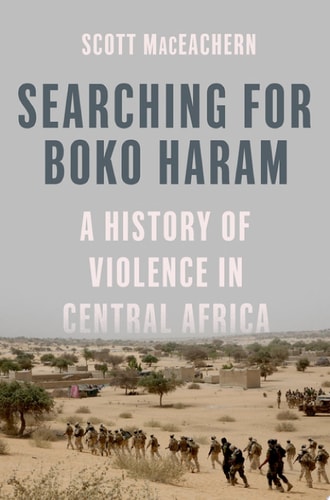
Searching for Boko Haram
0
0
As an Amazon Associate and affiliate partner, Menrva Books earns from qualifying purchases. Learn more
Author Description
For the past decade, Boko Haram has relentlessly terrorized northeastern Nigeria. Few if any explanations for the rise of this violent insurgent group look beyond its roots in worldwide jihadism and recent political conflicts in Central Africa. Searching for Boko Haram is the first book to examine the insurgency within the context of centuries, millennia even, of cultural change in the region. The book surveys the deep history of the lands south of Lake Chad, richly documented in archaeology and texts, to show how ancient natural and cultural events can aid in our understanding of Boko Haram's present agenda. The land's historical narrative stretches back five centuries, with cultural origins that plunge even deeper into the past. One important feature of this past is the phenomenon of frontiers and borderlands. In striking ways, Boko Haram resembles the frontier slave raiders and warlords who figure in precolonial and colonial writings on the southern Lake Chad Basin. Presently, these accounts are paralleled by the activity of smugglers, bandits (coupeurs de route--road cutters), and tax evaders. The borderlands of these countries are today places where the state often refuses to exercise its full authority because of the profits and opportunities illicit relationships afford state officials and bureaucrats. For the local community, Boko Haram's actions are readily understandable in terms of slave raids and borderlands. They are not mysterious and unprecedented eruptions of violence and savagery, but--as the book argues--recognizable phenomena within the contexts of local politics and history. Written from the perspective of an author who has worked in this part of Africa for more than thirty years, Searching for Boko Haram provides vital historical context to the recent rise of this terroristic force, and counters misperceptions of their activities and of the region as a whole.
Menrva's Summary
THE THESIS
How can the rise of Boko Haram be understood through the lens of deep history and regional cultural patterns rather than solely through the framework of global jihadism? Scott MacEachern, an archaeologist with over thirty years of experience in the Lake Chad Basin, argues that the current insurgency is not an unprecedented eruption of violence. By examining centuries of regional history, he posits that Boko Haram functions as a modern iteration of historical frontier slave raiders and warlords who have long operated in the borderlands of the region.
THE SCOPE MAP
What You Will Find
- An analysis of the historical narrative of the Southern Lake Chad Basin spanning five centuries.
- A framework connecting contemporary banditry and smuggling to precolonial and colonial power structures.
- An examination of how state authority is negotiated or abandoned in borderland regions for illicit profit.
Scope Limits
- The book does not provide a comprehensive military history of the Nigerian armed forces' response to the insurgency.
- It does not focus on the theological debates within global jihadist movements.
THE AUTHORITY PERSPECTIVE
Experts in African studies and archaeology highlight this work as a necessary corrective to the narrow focus on religious extremism in media coverage of the region. Readers frequently note that the author's long-term field experience provides a grounded, nuanced perspective that challenges common misperceptions about the nature of the conflict.
Page Count:
224
Publication Date:
2018-01-01
Publisher:
Oxford University Press
ISBN-10:
0190492538
ISBN-13:
9780190492533
History
Archaeology
Conflict Studies
Sociology
Community Tags
Similar Books