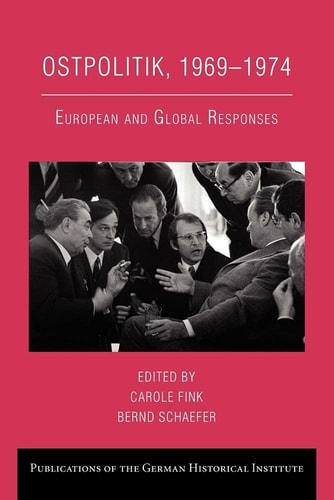
Ostpolitik, 1969-1974: European and Global Responses
0
0
As an Amazon Associate and affiliate partner, Menrva Books earns from qualifying purchases. Learn more
Author Description
Recent studies of the Cold War transcend a narrow focus on four decades of superpower rivalry, recognizing that leaders and governments outside of Washington and Moscow also exerted political, economic, and moral influence well beyond their own borders. One striking example was the Ostpolitik of Chancellor Willy Brandt, which not only redefined Germany's relation with its Nazi past but also altered the global environment of the Cold War. This book examines the years 1969-1974, when Brandt broke the Cold War stalemate in Europe by assuming responsibility for the crimes of the Third Reich and by formally renouncing several major West German claims, while also launching an assertive policy toward his Communist neighbors and conducting a deft balancing act between East and West. Not everyone then, or now, applauds the ethos and practice of Ostpolitik, but no one can deny its impact on German, European, and world history.
Menrva's Summary
THE THESIS
This book investigates the profound impact of Willy Brandt's Ostpolitik on European and global affairs during a critical period of the Cold War. The work focuses on the years 1969-1974, examining how Chancellor Brandt's policies, which acknowledged Germany's Nazi past and reoriented relations with Eastern Bloc nations, fundamentally altered the Cold War landscape. It explores the complex challenges Brandt navigated, including balancing East-West relations and redefining Germany's international standing. The book analyzes the multifaceted responses to Ostpolitik from European and global actors, acknowledging both its controversial aspects and its undeniable historical significance.
THE SCOPE MAP
- Analysis of Willy Brandt's Ostpolitik from 1969-1974.
- Examination of European and global responses to Ostpolitik.
- Exploration of Ostpolitik's role in redefining Germany's relationship with its Nazi past.
- Discussion of Brandt's policy of assuming responsibility for Third Reich crimes.
- Analysis of the formal renunciation of major West German claims.
- Investigation into Brandt's assertive policy toward Communist neighbors.
- Assessment of the balancing act conducted between East and West.
THE AUTHORITY PERSPECTIVE
The book examines the period of Willy Brandt's Ostpolitik, a policy that significantly reshaped European and global dynamics during the Cold War. It acknowledges that while Ostpolitik was not universally applauded, its impact on German, European, and world history is undeniable. The work analyzes the complex international reactions and the internal redefinition of Germany's identity and its place in the world. The scholarly approach suggests a detailed exploration of diplomatic strategies and historical consequences.
Page Count:
322
Publication Date:
2011-02-17
Publisher:
Cambridge University Press
ISBN-10:
0521181526
ISBN-13:
9780521181525
History
Politics
Non-Fiction
European History
Community Tags
Similar Books