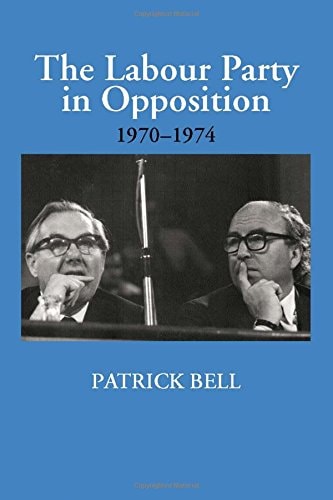
The Labour Party in Opposition, 1970-1974
0
0
As an Amazon Associate and affiliate partner, Menrva Books earns from qualifying purchases. Learn more
Author Description
This book shows how the Labour Party responded to electoral defeat in 1970 and to what extent its political and policy activity in opposition was directed to the recovery of power at the following general election. At a point in Labour's history when social democracy had apparently failed, this book considers what the party came up with in its place. The story of the Labour Party in opposition, 1970-1974, is shown to be one of a major political party sustaining policy activity of limited relevance to its electoral requirements. Not only that, but Labour regained office in 1974 with policies on wages and industrial relations whose unworkability led to the failure of the Labour government 1974-1979, and the Labour Party's irrelevance to so many voters after 1979. Using primary sources, the author documents and explains how this happened, focusing on the party's response to defear in 1970 and the behaviour of key individuals in the parliamentary leadership in response to pressure for a review of policy. The Labour Party in Opposition 1970-1974 will be essential reading for students and researchers of political history and the Labour Party.--Jacket.
Menrva's Summary
THE THESIS
This book investigates the Labour Party's strategic and policy evolution during its period in opposition from 1970 to 1974. It examines how the party responded to its 1970 electoral defeat, analyzing the extent to which its activities were geared towards regaining power. The work explores the party's search for an alternative to social democracy, which had seemingly failed, and critiques the policies adopted, particularly those concerning wages and industrial relations, which the author argues contributed to the government's subsequent failure and the party's electoral decline.
THE SCOPE MAP
- Analysis of the Labour Party's response to the 1970 general election defeat.
- Examination of the political and policy activities undertaken during the opposition years.
- Focus on the party's search for new ideological and policy directions beyond social democracy.
- Discussion of the role and behavior of key individuals within the parliamentary leadership.
- Use of primary sources to document and explain the party's trajectory.
- Critique of the unworkability of policies adopted by the Labour government (1974-1979).
THE AUTHORITY PERSPECTIVE
The book is positioned as essential reading for students and researchers of political history and the Labour Party. The jacket copy suggests that the author meticulously documents and explains the party's actions using primary sources. It highlights the book's focus on the leadership's response to policy review pressures following electoral defeat. The reception is framed by its utility for academic study and its critical analysis of the party's strategic choices during a pivotal period.
Page Count:
269
Publication Date:
2004-01-01
Publisher:
Psychology Press
ISBN-10:
0714654566
ISBN-13:
9780714654560
Non-Fiction
History
British Politics
Political History
Labour Party
Community Tags
Similar Books