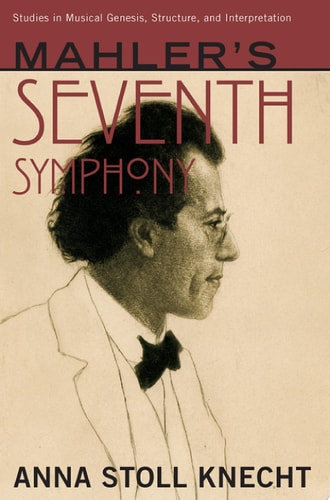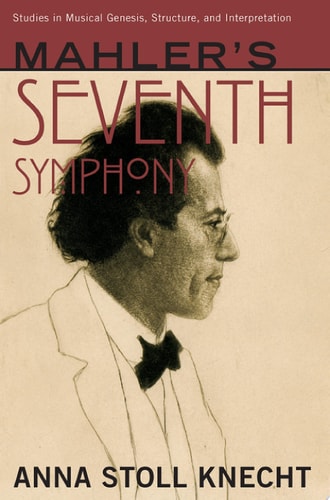
Mahler's Seventh Symphony
0
0
As an Amazon Associate and affiliate partner, Menrva Books earns from qualifying purchases. Learn more
Author Description
Gustav Mahler's Seventh Symphony stands out as one of the most provocative symphonic statements of the early twentieth century. Throughout its performance history, it has often been heard as "existing in the shadow" of the Sixth Symphony or as "too reminiscent" of Richard Wagner's opera Die Meistersinger von Nürnberg. Anna Stoll Knecht's Mahler's Seventh Symphony offers a new interpretation of the Seventh based on a detailed study of Mahler's compositional materials and a close reading of the finished work. With a focus on sketches previously considered as "discarded," Stoll Knecht exposes unexpected connections between the Seventh and both the Sixth and Meistersinger, confirming that Mahler's compositional project was firmly grounded in a dialogue with works from the past. This referential aspect acts as an important interpretive key to the work, enabling the first thorough analysis of the sketches and drafts for the Seventh, and shedding light on its complex compositional history. Considering each movement of the symphony through a double perspective, genetic and analytic, Stoll Knecht demonstrates how sketch studies and analytical approaches can interact with each other. Mahler's Seventh Symphony exposes new facets of Mahler's musical humor and leads us to rethink much-debated issues concerning the composer's cultural identity, revealing the Seventh's pivotal role within his output.
Menrva's Summary
THE THESIS
This book investigates the compositional history and structural integrity of Gustav Mahler's Seventh Symphony to determine its significance within the composer's broader body of work. Anna Stoll Knecht, a scholar specializing in Mahler's creative process, utilizes previously overlooked sketches and drafts to challenge the historical perception of the Seventh Symphony as a derivative or secondary work. By synthesizing genetic criticism with formal musical analysis, the author argues that the symphony functions as a deliberate, referential dialogue with Mahler's own Sixth Symphony and Richard Wagner's operatic output.
THE SCOPE MAP
What You Will Find
- Detailed examination of Mahler's discarded sketches and early drafts.
- Comparative analysis between the Seventh Symphony, the Sixth Symphony, and Die Meistersinger von Nürnberg.
- A dual-methodology approach combining genetic study with traditional musical analysis.
Scope Limits
- The text does not provide a general biography of Gustav Mahler outside the context of the Seventh Symphony.
- It does not offer a comprehensive performance history of the work beyond its critical reception.
THE AUTHORITY PERSPECTIVE
Scholars and musicologists recognize this work as a significant contribution to Mahler studies, particularly for its rigorous use of primary source materials. Readers frequently note the academic density of the prose, which is intended for those with a strong background in music theory and historical musicology.
Page Count:
396
Publication Date:
2019-11-12
Publisher:
Oxford University Press
ISBN-10:
0190491116
ISBN-13:
9780190491116
Biography
Musicology
Compositional History
Symphonies
Music theory
Community Tags
Similar Books