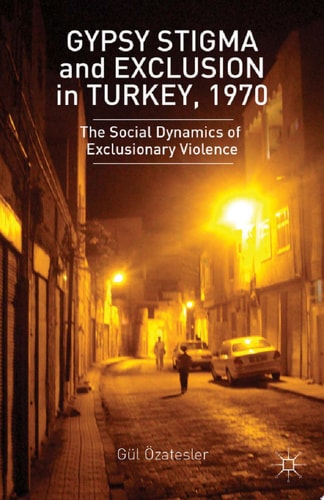
Gypsy Stigma and Exclusion in Turkey, 1970
0
0
As an Amazon Associate and affiliate partner, Menrva Books earns from qualifying purchases. Learn more
Author Description
Using an oral history approach, this book draws on Gypsy and non-Gypsy narratives to tell the story of Gypsy forced dislocation from Bayramic, a northwestern town of Turkey, in 1970. Gül Özatesler examines memory construction, the categories of Gypsyness and Turkishness, and the different perspectives and positions that emerged, considering all in relation to underlying socioeconomic structure. The book reveals how ethnic and other identities can be deployed to conceal socioeconomic and political inequalities.
Menrva's Summary
THE THESIS
The forced dislocation of a Gypsy community in 1970 Turkey serves as the focal point for an examination of identity, memory, and socioeconomic inequality. Gül Özatesler utilizes oral histories from both Gypsy and non-Gypsy individuals to reconstruct the events surrounding the expulsion from Bayramic. The book analyzes how concepts of 'Gypsyness' and 'Turkishness' were constructed and deployed, revealing how these identity categories were used to mask deeper socioeconomic and political disparities within the region. It explores the complex interplay between memory, identity formation, and the underlying social structures that led to the community's displacement.
THE SCOPE MAP
- An oral history approach drawing on narratives from both Gypsy and non-Gypsy individuals.
- An examination of the forced dislocation of a Gypsy community from Bayramic, Turkey, in 1970.
- Analysis of memory construction and its role in shaping historical narratives.
- Exploration of the categories of 'Gypsyness' and 'Turkishness' and their social implications.
- Consideration of different perspectives and positions within the community and society.
- Investigation of how socioeconomic structures influenced ethnic and identity politics.
- Insights into how identity can be used to conceal socioeconomic and political inequalities.
THE AUTHORITY PERSPECTIVE
The book is an academic study that employs oral history to investigate a specific instance of ethnic displacement in Turkey. Its focus on memory construction and the deployment of identity categories suggests a nuanced approach to understanding social dynamics. The examination of socioeconomic structures as underlying causes for ethnic exclusion points to a critical perspective on power and inequality. The methodology of using diverse narratives aims to provide a comprehensive understanding of the event and its broader implications.
Page Count:
247
Publication Date:
2014-01-22
Publisher:
Springer Nature
ISBN-10:
1137386622
ISBN-13:
9781137386625
History
Non-Fiction
Oral History
Ethnic Studies
Sociology
Community Tags
Similar Books