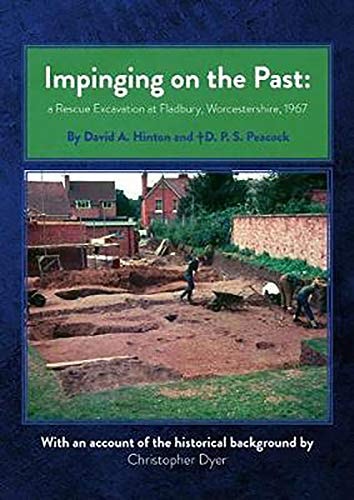
Impinging on the Past: A Rescue Excavation at Fladbury, Worcestershire, 1967
0
0
As an Amazon Associate and affiliate partner, Menrva Books earns from qualifying purchases. Learn more
Author Description
The prehistoric, Roman, and Anglo-Saxon periods were all represented in an excavation carried out in the center of a Worcestershire village some time ago, but with results that can now be seen in new light because of all the archaeological work that has taken place since. A deep Iron Age ditch can be set in the context of enclosures revealed, mainly by air photography, of the gravel terraces in the river valleys of the Severn and Avon. The Romano-British skeletons form a small, elderly and hard-worked group, providing a contrast to the better-known large urban cemeteries. The growing of crops on an increasingly large scale has been demonstrated for the seventh to ninth centuries A.D., and at Fladbury the complex arrangements made to dry grain on what is known to have been a large and important estate show the resources put into feeding royal, aristocratic, and ecclesiastical households.
Menrva's Summary
THE THESIS
This book re-examines a 1967 rescue excavation at Fladbury, Worcestershire, in light of subsequent archaeological advancements. The excavation uncovered evidence from the prehistoric, Roman, and Anglo-Saxon periods, offering a unique opportunity to reassess findings with modern archaeological understanding. The work details a deep Iron Age ditch, placing it within the context of broader enclosure patterns identified through aerial photography in the Severn and Avon river valleys. It also analyzes Romano-British skeletons, contrasting this small, elderly, and presumably labor-intensive group with larger urban cemeteries. Furthermore, the book explores the large-scale crop cultivation and complex grain-drying arrangements on a significant estate during the seventh to ninth centuries AD, highlighting the resources dedicated to provisioning royal, aristocratic, and ecclesiastical households.
THE SCOPE MAP
- Analysis of prehistoric, Roman, and Anglo-Saxon period findings from a 1967 excavation.
- Contextualization of an Iron Age ditch within regional enclosure patterns revealed by aerial photography.
- Examination of Romano-British skeletal remains, focusing on their age, health, and likely labor.
- Detailed study of seventh to ninth-century AD agricultural practices, including large-scale crop cultivation and grain drying.
- Insights into the logistical and resource management of a major estate supporting elite households.
THE AUTHORITY PERSPECTIVE
This publication offers a detailed re-evaluation of a significant archaeological excavation, integrating contemporary findings with older fieldwork. The analysis of Iron Age, Roman, and Anglo-Saxon evidence provides a nuanced perspective on settlement, agriculture, and social structures in the region. The focus on the practicalities of estate management and provisioning for elite households contributes to a deeper understanding of the period. The book is positioned as a scholarly contribution to the study of British archaeology, particularly concerning the Worcestershire region.
Page Count:
96
Publication Date:
2020-01-01
Publisher:
Highfield Press
ISBN-10:
0992633699
ISBN-13:
9780992633691
History
Non-Fiction
Archaeology
Iron Age
Roman Britain
Community Tags
Similar Books