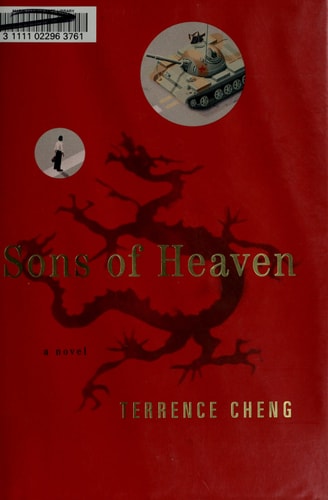
Sons of Heaven: A Novel
0
0
As an Amazon Associate and affiliate partner, Menrva Books earns from qualifying purchases. Learn more
Author Description
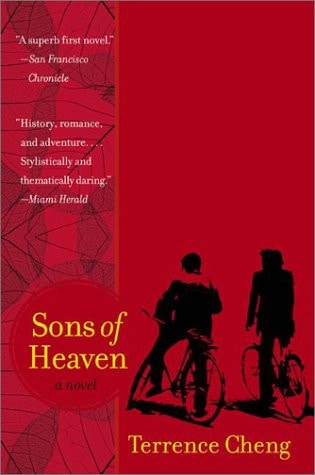
Sons of Heaven is an epic novel set against the backdrop of one of modern history's most haunting events: the Tiananmen Square Massacre. In June of 1989, the world watched in horror as China's military was mobilized to suppress a student movement that stood for peaceful democracy. Hundreds were killed; others say into the thousands. No one knows for sure.But the image that remains most powerful is that of a lone young man, looking confused yet terribly brave, as he held his ground before a rolling line of tanks. Who was he, and why did he do what he did? No one has ever been able to determine his identity or fate. Within the pages of Sons of Heaven, in a stunning blend of history and fiction, Terrence Cheng has vividly created for this young hero a life, and given him a voice.Cheng constructs the young man's life as he goes away to America to complete his education. He falls in love with a beautiful young American girl who opens to him a free life filled with opportunity. When he returns to China he becomes embittered and disillusioned; only the potential for political change seems to revive him. Also portrayed is the story of the young man's older brother, an ardent member of the Red Army, who is ordered to capture his sibling. In the end, their political differences turn deadly. On one level this is a novel of history as played out in modern China, but first and foremost, it is about the universal ties of family and the difficult process of boys learning to become men.Cheng also scrutinizes the life and history of Deng Xiaoping, China's leader who is suspected of giving the final order to turn the People's Army against its own people. What historical and political factors affected his decisions that fateful summer? Was Deng the monster that the world made him out to be?An unsettling and powerfully lacerating story of family, faith, and courage, Sons of Heaven weaves the lives of peasants and soldiers, politicians and gods, into a timeless snapshot of one of history.
Menrva's Summary
THE PULSE
A young man stands before a line of tanks in Tiananmen Square, an act of defiance that serves as the climax to a life shaped by political upheaval and personal conflict. The protagonist, a student who experienced the freedoms of American life, returns to a volatile China only to find himself at odds with his own brother, a loyalist in the Red Army. The narrative shifts between the perspectives of the student, his brother, and the political architect Deng Xiaoping, creating a multi-layered examination of the 1989 protests. The story explores the tension between individual conscience and state authority within a rigid, shifting political landscape.
INSIDE THE PAGES
- Multi-perspective narrative structure
- Historical dramatization of the 1989 Tiananmen Square protests
- Exploration of the immigrant experience in America
- Character study of Deng Xiaoping
- Examination of fraternal conflict and political ideology
- Contrast between democratic ideals and authoritarian control
- Focus on the psychological development of the central protagonist
- Integration of real-world political events with fictionalized personal histories
THE COLLECTIVE ECHO
Readers frequently highlight the author's ability to humanize the anonymous figure of the Tank Man through a detailed, fictionalized biography. Discussion often centers on the effectiveness of the dual narrative, which pits the student's newfound democratic values against his brother's military indoctrination. Critics note the balance between the intimate family drama and the broader, high-stakes political maneuvering of the Chinese leadership. The pacing is often described as deliberate, allowing for a thorough examination of the ideological divide that defined the era. Many readers appreciate the nuanced portrayal of Deng Xiaoping, which moves beyond simple villainy to explore the pressures of state power.
Page Count:
312
Publication Date:
2002-04-01
Publisher:
William Morrow & Co
ISBN-10:
0060002433
ISBN-13:
9780060002435
Contemporary
Historical Fiction
Historical
Political fiction
Family Saga
Literary
Political
China
Contemporary
United States
Genre Fiction