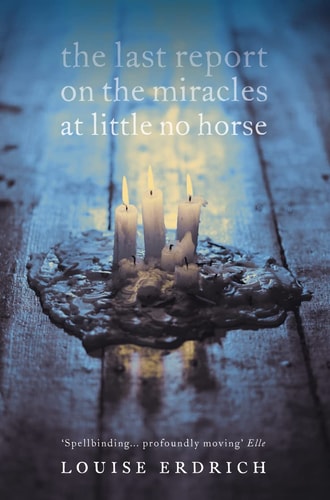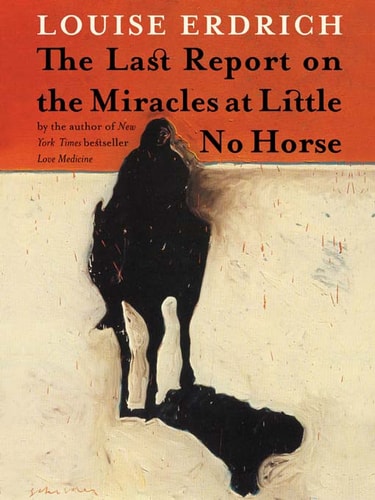
The Last Report on the Miracles at Little No Horse
0
0
As an Amazon Associate and affiliate partner, Menrva Books earns from qualifying purchases. Learn more
Author Description
For more than a half century, Father Damien Modeste has served his beloved Native American tribe, the Ojibwe, on the remote reservation of Little No Horse. Now, nearing the end of his life, Father Damien dreads the discovery of his physical identity, for he is a woman who has lived as a man. To further complicate his quiet existence, a troubled colleague comes to the reservation to investigate the life of the perplexing, possibly false saint Sister Leopolda. Father Damien alone knows the strange truth of Leopolda's piety, but these facts are bound up in his own secret. He is faced with the most difficult decision: Should he tell all and risk everything... or manufacture a protective history for Leopolda, though he believes her wonder-working is motivated solely by evil?
Menrva's Summary
THE PULSE
As Father Damien Modeste nears the end of his life on the Little No Horse reservation, he faces the imminent exposure of his secret identity as a woman living as a man. Father Damien has served the Ojibwe people for over half a century, navigating the complexities of faith and survival within a remote community. His quiet existence is threatened by the arrival of a colleague tasked with investigating the sainthood of Sister Leopolda, a figure whose history is inextricably linked to his own. The narrative framework utilizes a non-linear approach, weaving together the priest's internal reflections, historical accounts of the reservation, and the immediate pressure of the impending investigation. He must decide whether to reveal his true self or construct a narrative that protects the reputation of a woman he considers dangerous.
INSIDE THE PAGES
- Exploration of gender identity and performance within a religious context
- Multi-generational perspective on the Ojibwe reservation
- Interconnected character arcs spanning multiple novels
- Examination of the intersection between indigenous spirituality and Catholicism
- Use of epistolary elements through the titular reports
- Focus on the nature of sainthood and religious hypocrisy
- Atmospheric depiction of the North Dakota landscape
- Introspective character study of a protagonist living a double life
THE COLLECTIVE ECHO
Readers and critics frequently highlight the lyrical quality of the prose and the depth of the characterization within this work. Discussion often centers on the moral ambiguity of the protagonist and the complex portrayal of faith in a colonial setting. Many readers appreciate how the novel expands the interconnected world of the author's previous books while maintaining a distinct focus on the internal conflict of Father Damien. The pacing is noted for its deliberate, reflective nature, which allows for a thorough examination of the themes of identity and historical truth. Critics often point to the balance between the harsh realities of reservation life and the spiritual questions that drive the narrative forward.
Page Count:
384
Publication Date:
2021-01-01
Publisher:
Harper Collins
ISBN-10:
0060005637
ISBN-13:
9780060005634
Literary Fiction
Politics
Historical Fiction
Anthropology
Cultural
Literary
Indigenous
Native American
Religious Fiction
Family life
Political
Contemporary
Ethnic Studies
Historical
Fiction
United States
LGBTQ