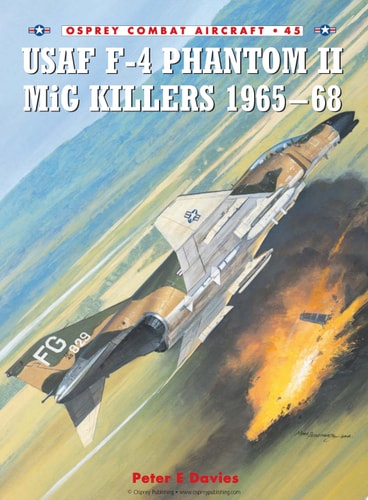
USAF F-4 Phantom II MiG Killers 1965–68
0
0
As an Amazon Associate and affiliate partner, Menrva Books earns from qualifying purchases. Learn more
Author Description
The USAF introduced the F-4C Phantom II into the Vietnam war in April 1965 from Ubon RTAB, Thailand. The F-4C/D soon became the Air Force's principal fighter over the North, destroying 85 MiGs by the close of 1968. This book describes how the USAF turned a gunless naval interceptor into an opponent to the more nimble VPAF MiGs. It explains how the Air Force gradually followed US Navy initiatives in the use of the F-4's missile armament but employed very different tactics and aircrew training. The roles of key personalities such as Col. Robin Oldany are discussed, together with armament and markings, crews and engagements.
Menrva's Summary
THE THESIS
This book details the United States Air Force's adaptation of the F-4 Phantom II to combat North Vietnamese MiG fighters during the Vietnam War. It explains how the USAF transformed a naval interceptor, initially lacking a gun, into an effective opponent for more agile VPAF MiGs, detailing the evolution of tactics and aircrew training that mirrored but diverged from US Navy initiatives. The narrative covers the crucial period from April 1965 to the close of 1968, during which USAF F-4Cs and Ds destroyed 85 MiGs.
THE SCOPE MAP
- The introduction of the F-4C Phantom II into the Vietnam War in April 1965.
- The development of tactics and aircrew training to counter VPAF MiGs.
- The USAF's approach to missile armament, contrasting with US Navy methods.
- The roles of key figures, including Col. Robin Olds.
- Details on the armament, markings, and operational engagements of the F-4 Phantom II.
- Analysis of the 85 MiG kills attributed to USAF F-4Cs/Ds between 1965 and 1968.
THE AUTHORITY PERSPECTIVE
This book is recognized for its detailed account of the USAF's aerial combat operations during the Vietnam War, specifically focusing on the F-4 Phantom II's role in achieving air superiority. It is appreciated for its examination of how the Air Force adapted a complex aircraft and its armament to counter enemy threats. The inclusion of specific tactical developments, training regimens, and the contributions of key personnel provides a comprehensive overview of this critical period in air warfare history. The work serves as a valuable resource for enthusiasts of military aviation and the Vietnam conflict.
Page Count:
96
Publication Date:
2012-11-20
Publisher:
Bloomsbury Publishing
ISBN-10:
1782007539
ISBN-13:
9781782007531
History
Non-Fiction
Military History
Vietnam War
Aviation
Community Tags
Similar Books