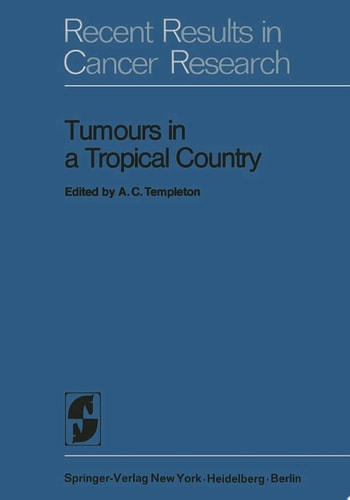
Tumours in a Tropical Country: A Survey of Uganda 1964–1968
0
0
As an Amazon Associate and affiliate partner, Menrva Books earns from qualifying purchases. Learn more
Author Description
The geography of medicine is a classical subject that can be studied wherever medicine is practised and the population counted. It has already contributed a great deal to knowledge of the causes of disease and it might be thought that the subject had little more to teach. This, however, is unlikely. First, there are many parts of the world that have only recently been provided with the full range of diagnostic services. Secondly, it is now realised that the ob servation that a disease occurs only very rarely under some conditions can be just as important as the observation that it occurs very often under others. Thirdly, the spread of industrializa tion has not yet eliminated the wide variety of conditions of life that has been produced by different cultures and different standards of living. We have still an opportunity to determine their effect on the incidence of disease, but not perhaps for long. That an interest in the geography of cancer can pay dividends is shown by many examples ranging from the relationships between cancer of the buccal cavity and chewing habits and between cancer of the lung and smoking, to the current enquiries relating Burkitt's lymphoma to malaria, cancer of the oesophagus to the comsumption of maize beer, cancer of the liver to food contaminated with aflatoxin, and cancer of the large bowel to the dietary content of fibre and fat.
Menrva's Summary
THE THESIS
This survey investigates the incidence and geographical distribution of tumours in Uganda between 1964 and 1968. The study is situated within the broader context of medical geography, a field that has historically yielded significant insights into disease causation. The author, A. C. Templeton, likely draws upon diagnostic data and epidemiological observations from Uganda during the specified period. The work aims to contribute to the understanding of cancer geography by examining rare disease occurrences and the impact of diverse living conditions and cultural practices on disease incidence.
THE SCOPE MAP
- Analysis of tumour types and their prevalence in Uganda.
- Geographical mapping of tumour incidence across different regions of Uganda.
- Correlation of tumour occurrence with environmental and socio-cultural factors specific to Uganda.
- Discussion of diagnostic services available in Uganda during the 1960s.
- Exploration of the relationship between specific habits or exposures and cancer types observed in the study population.
- Contribution to the understanding of cancer geography in a tropical, developing country context.
THE AUTHORITY PERSPECTIVE
The book appears to be a specialized academic survey focusing on a specific epidemiological study conducted in Uganda during a defined historical period. Its value likely lies in its detailed data collection and analysis of tumour incidence within a particular geographical and cultural context. The work contributes to the understanding of medical geography and the factors influencing disease patterns, particularly in tropical regions. The detailed survey format suggests it is intended for researchers and public health professionals interested in the epidemiology of cancer in Africa.
Page Count:
348
Publication Date:
2012-12-06
Publisher:
Springer Science & Business Media
ISBN-10:
3642807259
ISBN-13:
9783642807251
History
Science & Technology
Non-Fiction
Cancer Research
Public Health
Epidemiology
MEDICAL History
Community Tags
Other Editions(4)

Similar Books







Reader Comments
Share Your Thoughts
No comments yet. Be the first to share your thoughts!