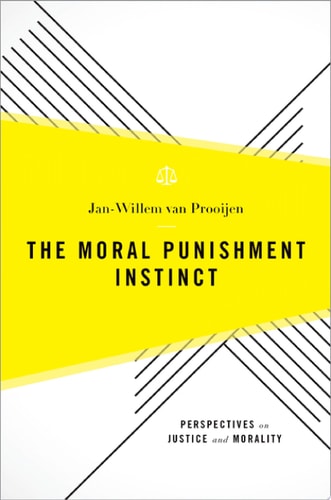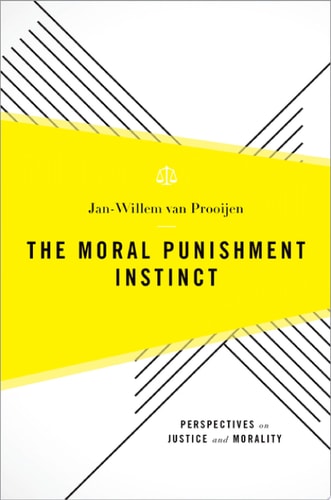
The Moral Punishment Instinct
0
0
As an Amazon Associate and affiliate partner, Menrva Books earns from qualifying purchases. Learn more
Author Description
Punishment Of Offenders Is One Of The Most Universal Features Of Human Behavior. Across Time And Cultures It Has Been Common For People To Punish Offenders, And One Can Easily Find Examples Of Punishment Among Ancient Hunter-gatherers, In Holy Scriptures, In Popular Culture, And In Contemporary Courts Of Law. Punishment Is Not Restricted To Criminal Offenders, But Emerges Within All Spheres Of Our Social Life, Including Corporations, Public Institutions, Traffic, Sports Matches, Schools, Parenting, And More. Punishment Strongly Influences What We Think, How We Feel, And What We Do. The Moral Punishment Instinct Asserts That People Possess A Hard-wired Tendency To Aggress Against Those Who Violate The Norms Of Their Group. We Have Evolved This Instinct Because Of Its Power To Control Behavior By Curbing Selfishness And Free-riding, Thereby Providing Incentives To Stimulate The Mutual Cooperation That Ancient Hunter-gatherers Needed In Order To Survive In Challenging Natural Environments. In This Book, Jan-willem Van Prooijen Methodically Describes How Punishment Originates From Moral Emotions, Stimulates Cooperation, And Shapes The Social Life Of Human Beings. Guided By A Host Of Recognizable And Relatable Examples, This Book Illuminates How The Moral Punishment Instinct Manifests Itself Among A Variety Of Modern Human Cultures, Children, Tribes Of Hunter-gatherers, And Even Non-human Animals-all While Accounting For The Role Of This Instinct In Religion, War, Racial Bias, Restorative Justice, Gossip, Torture, And Radical Terrorism.
Menrva's Summary
THE THESIS
This book investigates the evolutionary origins and psychological mechanisms behind the human tendency to punish norm violators. Jan-Willem van Prooijen, a social psychologist, synthesizes research from evolutionary biology, anthropology, and social psychology to argue that punishment is a hard-wired instinct. He posits that this behavior evolved as a functional tool to curb free-riding and promote cooperation within early human groups, ultimately shaping the structure of modern social institutions.
THE SCOPE MAP
What You Will Find
- Evolutionary framework explaining the survival benefits of punitive behavior.
- Analysis of moral emotions as drivers for social regulation.
- Comparative studies across hunter-gatherer tribes, children, and non-human animals.
- Examination of punishment in diverse contexts including religion, war, and criminal justice.
Scope Limits
- The text does not provide a comprehensive legal analysis of specific modern penal codes.
- It does not focus on individual clinical pathology or specific psychiatric disorders related to aggression.
THE AUTHORITY PERSPECTIVE
Scholars and readers frequently note the accessibility of the prose despite the complex evolutionary themes presented. Experts highlight this work as a useful synthesis for those seeking to understand the biological roots of social justice and punitive impulses in contemporary society.
Page Count:
208
Publication Date:
2017-01-01
Publisher:
Oxford University Press
ISBN-10:
0190609982
ISBN-13:
9780190609986
Psychology
Criminology
Sociology
Ethics
Behavioral Science
Evolutionary Psychology