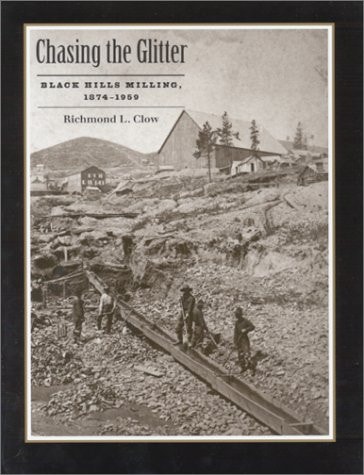
Chasing the Glitter: Black Hills Milling, 1874-1959
0
0
As an Amazon Associate and affiliate partner, Menrva Books earns from qualifying purchases. Learn more
Author Description
Clow (Native American studies, U. of Montana-Missoula) offers an overview of the gold milling industry in the Black Hills of South Dakota. A miner's geology of the region is followed by discussion of the developing industrial processes that led to each major shift in technology, from the construction of the first mills to the refinement of the blue refractory ores. The book includes abundant b&w illustrations, primarily of the buildings and landscapes. Annotation c. Book News, Inc., Portland, OR (booknews.com)
Menrva's Summary
THE THESIS
The book examines the evolution of gold milling technology in the Black Hills of South Dakota from 1874 to 1959. Richmond L. Clow, an expert in Native American studies, details the geological context of the region and traces the development of industrial processes. The narrative follows the progression of technology, from the initial construction of mills to the sophisticated refinement of blue refractory ores. Abundant black and white illustrations depict the buildings and landscapes central to this industrial history.
THE SCOPE MAP
- Overview of the gold milling industry in the Black Hills, South Dakota.
- Miner's geology of the region.
- Development of industrial processes and technological shifts.
- Chronological progression from early mill construction to advanced ore refinement.
- Focus on the refinement of blue refractory ores.
- Inclusion of abundant black and white illustrations of buildings and landscapes.
THE AUTHORITY PERSPECTIVE
This historical account of the Black Hills gold milling industry is likely to appeal to those interested in regional history, mining technology, and industrial development. The author's detailed examination of technological evolution, from early mills to advanced ore refinement, provides a comprehensive look at the period. The inclusion of numerous illustrations of buildings and landscapes further enhances the reader's understanding of the physical context of this industry. The book serves as a valuable resource for understanding a specific facet of American industrial history.
Page Count:
216
Publication Date:
2002-04-03
Publisher:
South Dakota State Historical Society Press
ISBN-10:
0971517118
ISBN-13:
9780971517110
History
Business
Non-Fiction
Technology
Community Tags
Similar Books