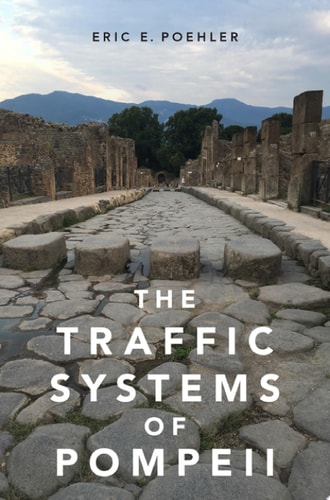
The Traffic Systems of Pompeii
0
0
As an Amazon Associate and affiliate partner, Menrva Books earns from qualifying purchases. Learn more
Author Description
The Traffic Systems of Pompeii is the first sustained examination of the development of road infrastructure in Pompeii-from the archaic age to the eruption of Mt. Vesuvius in 79 CE-and its implications for urbanism in the Roman empire. Eric E. Poehler, an authority on Pompeii's uniquely preserved urban structure, distills over five hundred instances of street-level "wear and tear" to reveal for the first time the rules of the ancient road. Through a thorough, yet lively, investigation of every facet of the infrastructure, from the city's urban grid and the shape of the streets to the treatment of their surfaces and the individual elements of construction, the intricacies of the Pompeian traffic system and the changes to its operation over time emerge in vivid detail. Though archaeological expertise forms the backbone of this book, its findings have equally important historical and architectural implications. Later chapters probe how the street design and infrastructure affected social roles and hierarchies among property owners in Pompeii, illuminating the economic forces that push and pull upon the shape of urban space. The final chapters set the road system into its broader context as one major infrastructural and administrative artifact of the Roman empire's deeply urban culture. Where does Pompeii's system fit within the history of Roman traffic control? Is it unique for its innovation, or only for the preservation that permitted its discovery? Poehler marshals evidence from across the Roman world to examine these questions. His measured and thoroughly researched answers make The Traffic Systems of Pompeii a critical step forward in our understanding of infrastructure in the ancient world.
Menrva's Summary
THE THESIS
How did the development of road infrastructure in Pompeii reflect and influence the urbanism of the Roman Empire? Eric E. Poehler, a specialist in Pompeian urban structure, utilizes extensive archaeological data to reconstruct the operational history of the city's streets. By analyzing over five hundred instances of physical wear and tear, the author establishes a framework for understanding how ancient traffic was managed, regulated, and integrated into the broader social and economic life of the Roman world.
THE SCOPE MAP
What You Will Find
- Analysis of street-level wear patterns and construction materials
- Examination of the urban grid and its evolution from the archaic age to 79 CE
- Investigation into the relationship between infrastructure, property ownership, and social hierarchy
- Comparative study of Pompeian traffic control against broader Roman administrative practices
Scope Limits
- Focus is primarily limited to the physical and administrative evidence found within Pompeii
- Does not provide a comprehensive history of all Roman road networks outside of urban contexts
THE AUTHORITY PERSPECTIVE
Scholars and historians recognize this work as a significant contribution to the study of Roman urbanism and infrastructure. Readers frequently note the technical precision of the archaeological analysis, which provides a clear, evidence-based understanding of ancient city planning.
Page Count:
296
Publication Date:
2017-10-10
Publisher:
Oxford University Press
ISBN-10:
0190614676
ISBN-13:
9780190614676
History
Archaeology
urban planning
Traffic engineering
Infrastructure
Communication And Traffic
Roman Empire
Streets
Community Tags
Other Editions(4)



Similar Books













Reader Comments
Share Your Thoughts
No comments yet. Be the first to share your thoughts!